Words by Stasi Kapetanos
Anyone who follows On Dit twitter (@OnDitMagazine) should know that the student elections, which seemed to be bothering everyone just a few short weeks ago, were a resounding victory for the political left in student politics.
Starting with the Adelaide University Union (AUU) board, we saw the Labor Left and Right finally achieve their goal of winning more positions than their Liberal aligned rivals. In fact, the Young Liberal associated ticket ‘Connect’ failed to secure an additional spot on board while their ‘apolitical’ allies held strong with two out of the five new spots going to them. Luckily for these two right-wing groupings, only half of the AUU’s Board directors are up for re-election every year.
Unlike the AUU’s Board, the Student Representative Council (SRC) was entirely up for re-election and boy did that show in the results. The SRC is made up of two types of members, General Councillors and officer bearers, (including the SRC President, General Secretary and various Officers). Among the General Councillors, the broad left factions won five of eight available positions with Progress only winning two and Connect just one (just as I predicted). While this win may look decisive, it only truly reveals itself as a complete landslide when one factors in the Office bearing positions. These three General Councillors are the only members of these two right-wing factions elected to the SRC at all (much to my surprise). Connect’s Henry Southcott was the only Young Liberal aligned candidate to get elected on campus this year, a far cry from the 2020 result which saw them dominate the SRC.
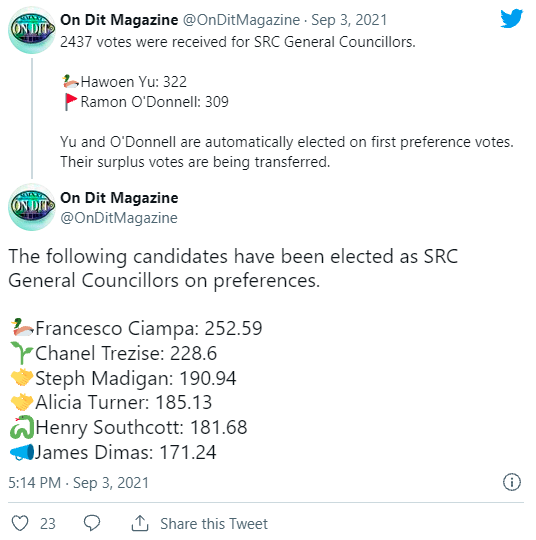
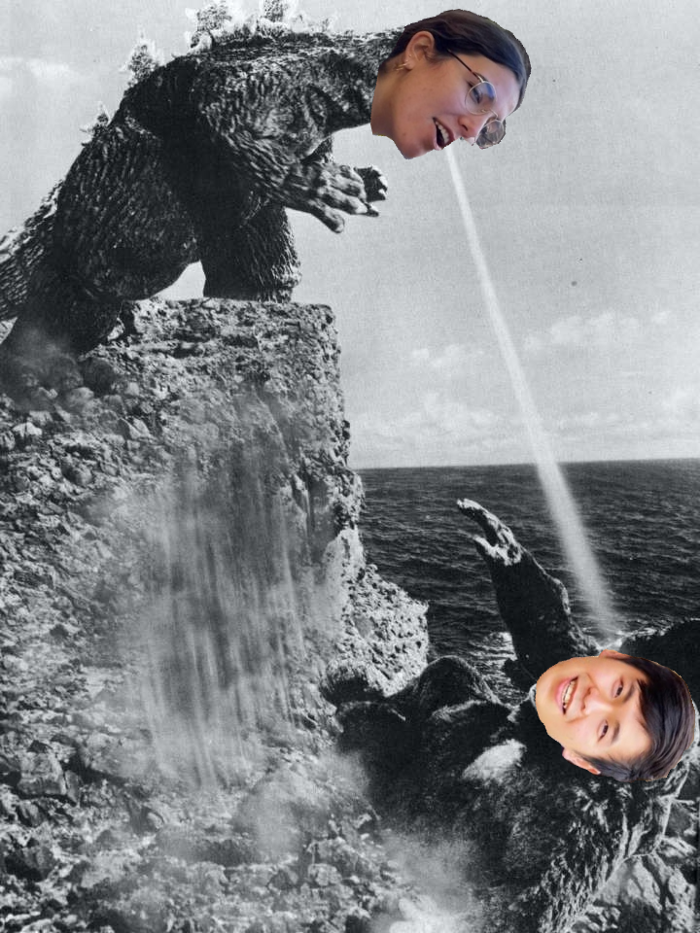
Notably, the broad left pact won an overwhelming landslide among the office bearer positions of the SRC with all positions going to them. This deal, an easy one for the Labor Left and the Greens to accommodate at least made strange bedfellows of the Labor Right and Socialist Alternative with Ana Obradovic defeating incumbent Progress SRC President Oscar Ong for the body’s top job. This is shown below with what to the best of my knowledge is the most popular On Dit tweet of all time.
“The Factions”
In case you were not aware by now, student elections at Adelaide, like at many other university campuses, are centred around political factions, much like how federal and state elections are centred around political parties. Love ’em or hate ’em, there would not be much point to a student election breakdown that does not delve into them.
Progress
Ideology: Apolitical/Conservative
Most Important Pickups: Luke Allen and Emily Deng for AUU Board
Greatest Defeat: Oscar Ong — SRC President
Approximate General Councillor Primary Vote: 875 (same as last year)
General Councillor Percentages: 35.9% (down from 37.3%)
Board Directors Elected: 2 (5 directors total)
SRC Office Bearers Elected: 0 (down by 3)
SRC General Councillors Elected: 2 (down by 1)
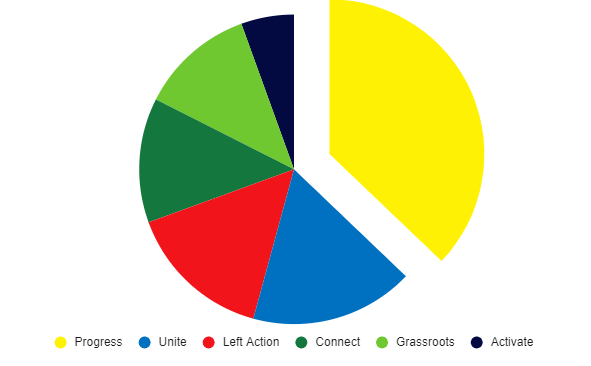
Despite once again taking home the most votes in this student election, Progress has found itself being one of the biggest losers. This is in no small part due to their poor relationship with left-leaning student representatives who they once considered allies. Progress’ relatively lacklustre performance when it comes to on the ground campaigning compared to both their leftist opponents and their past selves also likely played a decisive role in their wipe out on the SRC and their failure to maintain their winning streak against the left for the AUU board. Despite this, they still managed to retain their position as the largest vote winners and seem to have fared much better than their slightly more openly right-wing ally Connect. Perhaps, in future, Progress should return to their roots as a middle of the road truly apolitical faction that anyone would be willing to work with and/or vote for. They would also benefit from continuing in their tradition of representing international and ethnic minority students rather than transitioning into just another faction for right-wing white guys, as if the Young Liberals aren’t enough of a voice for this crowd. Factional warlord Oscar Ong should probably spend this year trying to find himself a worthy successor as opposed to padding out his resume further or using dubious political mechanisms to remove and get revenge on people while further staining the Progress brand. As more International Students return to University of Adelaide upon the conclusion of the pandemic, this temporarily embarrassed faction should see renewed growth. However, this may not occur soon enough to save their majority on the AUU board.
Unite
Ideology: Centrist/Progressive
Most Important Pickups: Felix Eldridge and Grace Franco for AUU Board
Greatest Defeat: Failing to secure a third AUU board director (Coming last in the elections for clubs committee that were won by newbies Grassroots and an independent must have stung a bit to)
Approximate GC Primary Vote: 425 (around 50 less than last year)
GC Percentages: 17.5% (down from 20.4%)
Board Directors Elected: 2 (3 directors total)
SRC Office Bearers Elected: 6 (up by 2)
SRC General Councillors Elected: 2 (no change)
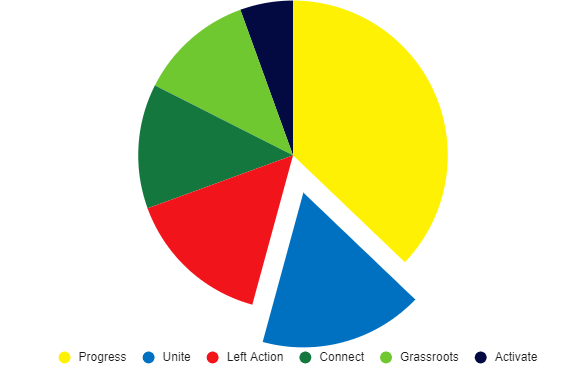
After a gutting defeat in last year’s student elections, this year Unite decided to bite the bullet and work with Left Action. This was a much tougher decision for them to make compared to the other left factions, Grassroots and Activate, who seemed far more enthusiastic about a deal entailing left unity. That’s if one could describe Unite as left-wing. Still, their participation in a left-wing preference played a critical role in getting Left Action’s Ana Obradovic elected as SRC President which in return helped Unite and their fellow Young Labor members Activate secure 3 of 5 Board positions this time round. If repeated next year this result should secure them and their left comrades control over the AUU. Despite losing a serious chunk of their vote share, this shortfall was largely remedied by the fact that most of the lost votes likely went to Grassroots who more than made up for it. Their strategy of relying on friendship and acquaintance networks seems to have worked well in tandem with Left Action’s unchallenged on the ground efforts. The deterioration in Unite’s in person campaigning was nevertheless still fairly noticeable. Although Unite agreed to forgo the SRC Presidency they will now hold a plurality on the SRC, crucial to the functioning of a left-leaning SRC majority. By continuing to work with their current allies from this year they should likely retain this strength and take the AUU board. Otherwise they will be forced to continue in their role as student politics king-makers, not a bad gig but it does not beat wearing the crown.
Left Action
Ideology: Revolutionary Socialist/Trotskyist
Most Important Pickups: Ana Obradovic — SRC President
Greatest Defeat: Only securing a single SRC General Councillor (grasping at straws over here)
Approximate GC Primary Vote: 375 (around 25 more than last year)
GC Percentages: 15.5% (up from 14.5%)
Board Directors Elected: N/A (0 total)
SRC Office Bearers Elected: 4 (up by 4)
SRC General Councillors Elected: 1 (no change)
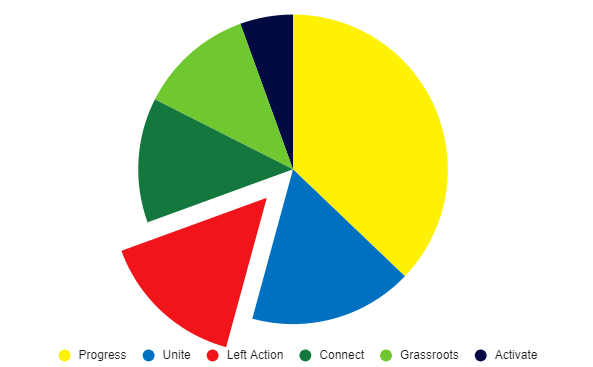
Left Action, an increasingly well organised but controversial group, even among the left, have secured themselves the Presidency of the SRC after working with the Young Labor and Greens affiliated factions. They did this whilst also taking full advantage of global and local capitalist crises, spearheading the associated student mobilisation observed in the most significant protest movements the University of Adelaide has seen in years. With the influence and resources of the SRC now at their disposal it is likely they will continue to make Adelaide’s most pretentious and elitist university ground zero for student activism and mass protest. Left Action’s success in this election lay in their ability and willingness to actively engage students on the ground in an organised and disciplined manner, not shying away from heated political discussion and actually viewing elections not just as a way to score points but also an avenue by which to gain new members and spread class consciousness. As their rivals intensified their focus on online voting, Left Action were almost entirely unchallenged on the ground, their closest competitor in this regard appearing to be the new Greens ticket, Grassroots. As leaders of the SRC, Left Action’s willingness to work constructively with their ‘frenemies’ on the more moderate parts of the left will determine whether or not their tenure on the SRC and by extension their plan for an activist centred student representation will be successful. If Left Action can continue to critique rival student representatives without resorting to overly harsh and cruel personal attacks they should be able to keep Grassroots and Activate onside enough to maintain the SRC Presidency for a second term, whilst also leveraging Unite’s desire to win control of the AUU in next year’s student elections.
Connect
Ideology: Green Liberal/National Conservative
Most Important Pickups: Henry Southcott — SRC General Councillor
Greatest Defeat: SRC office bearer wipe out
Approximate Primary Vote: 325 (around 150 less than last year)
GC Percentages: 13.3% (down from 20.4%)
Board Directors Elected: 0 (1 total)
SRC Office Bearers Elected: 0 (down by 6)
SRC General Councillors Elected: 1 (down by 1)
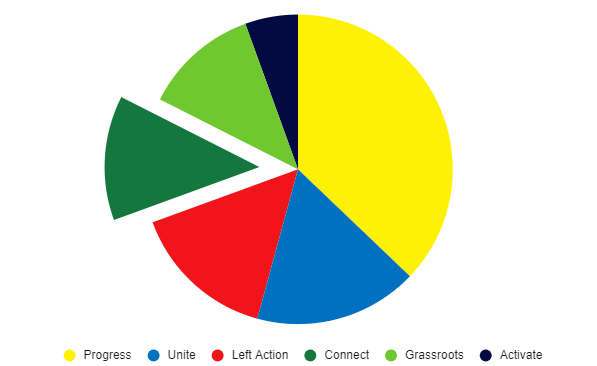
‘The Green Team on Campus’, Connect are not actually in any way linked to the Greens, instead mostly containing members of the Young Liberals. Despite some modestly eco-friendly reforms, their commitment to environmentalism seems to be mostly aesthetic, evidenced by their disinterest in divestment from fossil fuels and support for outgoing SRC President Oscar Ong, a critic of many Green policy proposals on campus. This green branding seemed to serve them well for a time, last year they held more office bearers than any other faction on the SRC and even scored a SRC Primary vote that was about the same as Unite’s, if not slightly higher. Alas, with Adelaide Uni Greens now organised around Grassroots, their eco-friendly niche has been challenged. This, along with the fact that many of their heavy hitters seem to have moved on from student politics, has led to a very unsuccessful student election campaign. With fewer members out and about on election week and less connections to draw on they lost almost a third of their vote share. Perhaps in the future, Connect or whatever replaces it should run as what they actually stand for, right-wing conservative politics. I doubt there is much demand for this style of politics, but they may as well be honest and upfront about it. Personally I think they should just quit student representation at Adelaide altogether, as they have at South Australia’s other universities, or at the very least re-brand. With only one SRC General Councillor being elected from Connect this year, it’s hard to imagine they could do any worse in future. So, at least they have that going for them.
Grassroots
Ideology: Green Socialist/Progressive
Most Important Pickups: Co-convenor Liam Johns elected SRC Rural Officer (Grassroots members Habibah Jaghoori and Chanel Tresize have also been elected On Dit editors for 2022)
Greatest Defeat: Only securing a single SRC General Councillor (again grasping at straws)
Approximate Primary Vote: 300
GC Percentages: 12.2%
Board Directors Elected: N/A (0 total)
SRC Office Bearers Elected: 3 (up by 2)
SRC General Councillors Elected: 1 (up by 1)

New kids on the block, Grassroots seem to come out of nowhere but have grown out from the membership of the relatively new Adelaide University Greens Club. In 2020, one Greens’ member even ran for SRC under Unite’s banner , while yours truly was successfully elected On Dit editor while holding a Greens party membership. Having been joined by defectors and disillusioned voters of almost every other faction on campus, mostly notably Activate, Grassroots found themselves with little institutional history but sufficient experience to hit the ground running. Adapting the Greens model of consensus democracy will be a bit of a struggle in the fast paced and at times morally ambiguous world of student representation where any democracy at all is seen as more of a privilege than a right. Grassroots out-campaigned all the more well established factions bar Left Action on the ground while also drawing on personal connections and reputations, things less valued by Left Action. If they can keep up this best of both worlds strategy while figuring out how to most successfully implement their uniquely grassroots vision of student politics there’s no reason for them not to aim for a presence on the AUU Board or positions on the SRC executive like General-Secretary or President in future elections. Until then, they ought to figure out how to avoid any perceptions that they are just Activate 2.0 or a watered down Left Action. Whipping out the Greens merch during election week was definitely a good start , as was promising to fight for environmentally friendly scholarships to students whose degrees could be rendered obsolete by transition and divestment from fossil fuels. Finally, a real ‘Green Team on Campus’.
Activate
Ideology: Democratic Socialist/Progressive
Most Important Pickups: Rebecca Etiene — AUU Board Director
Greatest Defeat: Not also electing Mat Monti Board Director (2 board directors here would be a really tall order)
Approximate Primary Vote: 125 (around 50 less than last year)
GC Percentages: 5.6% (down from 7.3%)
Board Directors Elected: 1 (1 total)
SRC Office Bearers Elected: 2 (up by 1)
SRC General Councillors Elected: 1 (up by 1)
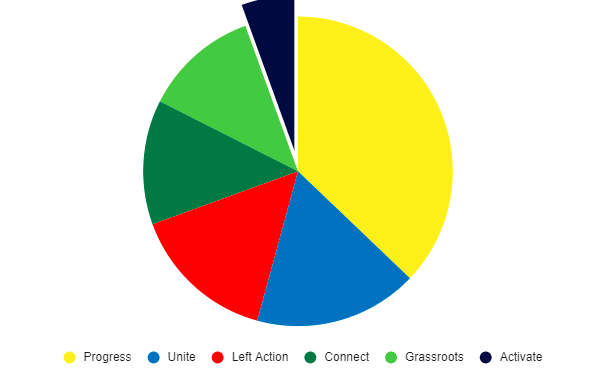
Activate were not long ago the biggest left-leaning faction in student politics, but have since been described by one former On Dit editor as an ‘irrelevant husk’ of their former selves. While it’s hard to dispute that they are but a shadow of what they used to be, they clearly are not irrelevant anymore, holding the balance of power on the SRC between an activist Left (Grassroots and Left Action) or institutionalist ‘pragmatist’ (Unite, Progress and Connect) majority. How the SRC addresses issues such as how to challenge funding cuts due to the institutional mergers and the AUKUS submarine deal will likely depend on their votes. Activate are also the only faction besides Unite and Progress to win a position on the AUU board this time around, edging out Connect while Left Action and Grassroots sat that race out, preferencing Unite. It’s not hard to imagine why they won here as well, with a popular and well liked candidate, incumbent Women’s Collective President, Rebecca Etienne (yes, the real Women’s Collective). Indeed Activate now seems to have shifted away from being a factional machine to a collection of a few popular names and faces also including Mat Monti, a rising star in music theatre as well as in student politics, and James Dimas with his 57 thousand twitter followers. Nonetheless the Activate vote share and campus campaign has continued to dwindle (not unlike Connect). Time will tell if this faction really is a moribund husk or about to climb out of a slump that should make their predecessors proud. However, if their ascension does not happen soon, I doubt it will happen at all.
Special thanks to all the stupol enthusiasts who helped with this article by answering my questions, providing me useful early data and cracking out some questionable photoshop because I don’t know how to.
 On Dit