
Words by Jordan Nedosyko
The spectre of cultural appropriation is hanging over the queer community, and it must be stopped in its tracks
Since the beginning of the LGBTQ+ rights movement, there has been a fundamental debate about what our “end goal” should be: invisibility and indifference within mainstream society, or the desire to forge a unique identity that breaks free of the “oppressive” ideals inherent to a heterosexual, cisgender world.
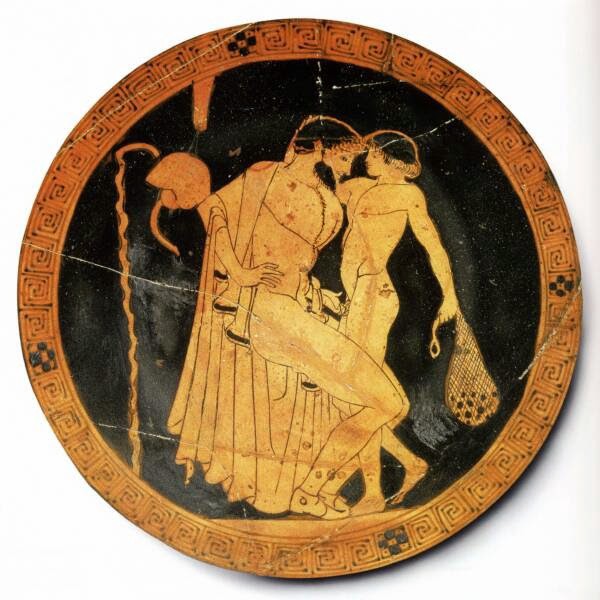
A majority of the earliest advocates for legal reform in the West that fought for same-sex attraction, such as early utilitarian philosoher Jeremy Bentham, were not queer people. Inspired by anti-clericalism and the humanist ideas of the Enlightenment, these reformists’ works were — generally — not written to take genuine action towards homosexual rights, but was instead a reaction against traditional Christian morality. Progressive works of the 1800s tended to view homosexuality as a mental illness requiring compassion, or held a romanticised nostalgia for Greco-Roman pederasty.
The first mass queer movement to sweep across the West was inspired by the zeitgeist of freedom that accompanied fights against fascism in the aftermath of World War II. Known as the homophile (from the Greek roots meaning “same love”) movement, its very name clues one into its political orientation. The movement attempted to distance the gay community from the “decadent” and “degenerate” undertones of the term “homosexuality”, which it had gained from its association with the European aristocracy of the 18th and 19th century. Michael Sibalis, professor emeritus of history at Wilfrid Laurier University, described the attitude of the homophile movement as such:
“Public hostility to homosexuals resulted largely from their outrageous and promiscuous behaviour; homophiles would win the good opinion of the public and the authorities by showing themselves to be discreet, dignified, virtuous and respectable.”
Due to its illegal nature in the United States, few members of these groups publicly revealed their identity; thus, the preeminent method of spreading their ideas was through the anonymity of magazines.
These early publications were filled with art that aimed to create self-acceptance and community when queer people were denounced by the American government as threats to the country’s way of life. Queer people were nothing but communist sympathisers to the straight American population, whose existence threatened religion, the nuclear family, capitalism; and thereby, the United States itself. Lyrical poems sung of the purity within same-sex love and beatniks scribed the emerging queer culture of the West Coast, helping to craft a sense of identity for queer people — even for those unable to participate.
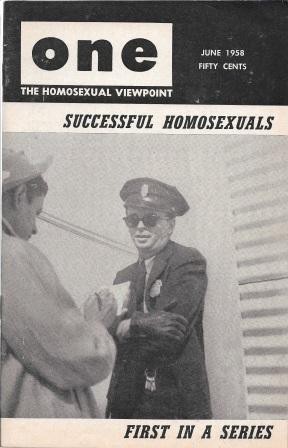
The readership of these magazines extended beyond the scope of the LGBTQ+ community and dismantled the harmful stigmas of the age. A 1958 issue of One Magazine (the most widely distributed of these queer magazine of the time) adorned the title Successful Homosexuals and featured an interview with an openly gay police officer. The homophile movement established a new sense of queer pride and openness in the Anglophone world, so much so that progressive US cities saw a spike in the appearence queer-friendly facilities. However, political gains were sparse and the movement died out in the 1970s, but was soon replaced with a new wave of more radical activism.
The start of this new gay liberation movement is typically pinpointed to the 1969 Stonewall Riots, which have become one (if not the only) event to transcend the pages of queer studies textbooks and enter public consciousness. Stonewall mimicked demonstrations from both second-wave feminism and the Black Power movement, adopting their practices to advance their own liberation.
In contrast to the homophiles, these new radical activists saw the previous generations’ progress as evidence that it would be of the impossible for queer people to integrate into a heterosexual-led reality. Trans and gender non-conforming people were granted loud and blatant visibility with the first Pride parades in 1970s America — a direct contradiction of the previous “respectable homosexual” image. The Gay Activists Alliance performed a “zap” at the American Broadcasting Company to protest the demonisation of homosexuality in the show Marcus Welby, M.D.
The legal reform that occurred as a response to the gay liberation movement was astronomical: numerous jurisdictions around the globe — including South Australia — legalised same-sex activity, Sweden became the first country to allow transgender people to legally change their gender, and LGBTQ+ people entered public office in unprecedented numbers.
Unfortunately, these increases in political acceptance were not mirrored socially; in fact, the opposite occurred. Homosexuality went from an invisible topic to the subject of open hatred and mockery, reinforcing the belief that queer identities could not assimilate into heterosexual society. The tension reached a climax during the AIDS crisis with a renaissance of conservatism in the 1980s and the proliferation of Protestant churches across the Anglosphere.
Modern queer culture has never seen itself so closely aligned with mainstream society. Take drag, for instance. What was once a rejection of gender normativity and a unique form of self-expression for gender diverse and gender non-conforming folk — an intersection of queerness and underground party culture shunned into shady gay bars — has been transformed by the growth of social media drag into a mainstream component of the beauty and entertainment industries. Makeup techniques that originated on the stages of LGBTQ+ night clubs have trickled down into the practices of celebrity makeup artists and reappropriated into modern beauty standards.
This shift from a predominantly queer to predominately straight audience was also seen when Rupaul’s Drag Race moved from Logo TV (which focused on LGBTQ+ content) to VH1 (a sister channel of MTV). A quick glance at the most popular drag queens on Instagram reveals this new audience’s liking to flamboyant and sassy “comedy queens” or conventionally attractive, “female-passing” queens. The transgressive nature of drag has been discarded in favour of mainstream sensibilities.
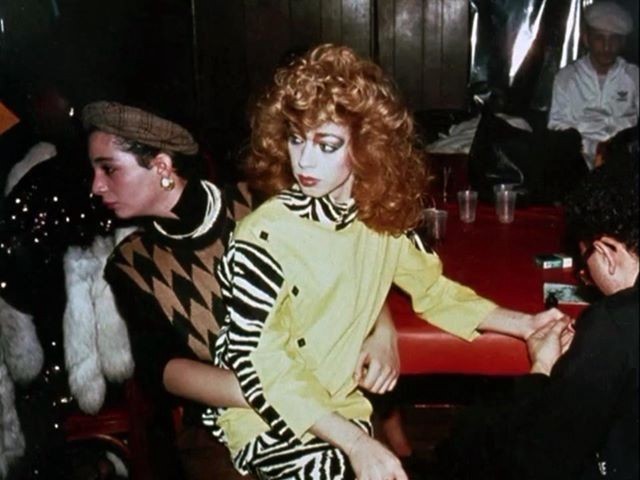
Massive amounts of slang popularised among Millennials and Gen Z through platforms such as TikTok originated in the ballroom culture of New York City. It is a testament to the progress made by the LGBTQ+ community that any conversation from the momentous documentary Paris is Burning would make more sense on 2021 Twitter than it would on the streets of the city it was filmed in. It would be unthinkable to the legendary Venus Xtravaganza, one of the multiple trans women and Q-POCs starring in the documentary, that the slang she used would come into widespread and global use irrespective of having her life taken in a transphobic hate crime 30 years prior.
And this cyclical phenomenon continues — house music originated at the underground house parties of Q-POCs in 1980s Chicago. Adopted by the likes of Janet Jackson and Madonna, house was passed around the mainstream music industry until it became more associated with newer, often white artists and trickled down into the mainstream to the point where it is more associated with people such as Calvin Harris and Avicii.
A similar trend is currently taking place with the rise of hyperpop. The original confluence of homemade remixes and sugary, overproduced sounds in A.G. Cook’s PC Music have been propelled out of obscurity by frequent collaborations between transgender icon Sophie Xeon (SOPHIE) and Charli XCX. Despite not currently topping the charts, SOPHIE has worked with some of the most prominent pop artists in the West, namely Rihanna and Lady Gaga. The genre is bound to fall victim to the same fate as the rest — watered down to suit the tastes of the dominant population.
While all this may be construed as edgy, hipster-ish whinging about queer culture becoming trendy, it can be argued that this integration into pop culture is a good thing for LGBTQ+ people. We have seen that queer subcultures emerge when we are forced to seek refuge from the oppression of “cis-het” life; now that this oppression is slowly fading, the need for a distinct queer identity and culture fades along with it. Today’s Pride parades show a melange of corporate logos. Profile pictures of massive corporations’ social media accounts are doused in rainbows, and in a capitalist society, acceptance by the moneyed is an asset.
Though it shouldn’t be assumed that acceptance of our culture inherently implies acceptance of us. With the same irony that has Black inequality still embedded in Western society despite Western music being dominated by genres pioneered by Black Americans (including rock, soul, R’n’B, hip-hop), the progress made in the past few decades can just as quickly be reversed. History should not be viewed as a linear progression from oppression to equality; if LGBTQ+ rights loses its cultural cachet, queer culture will be discarded just as quickly as it was adopted.
This article appears in Queer Dit, our LGBTQ+ themed issue. Pick up a copy on campus or read it online here.
 On Dit