Words by Sebastian Andrew
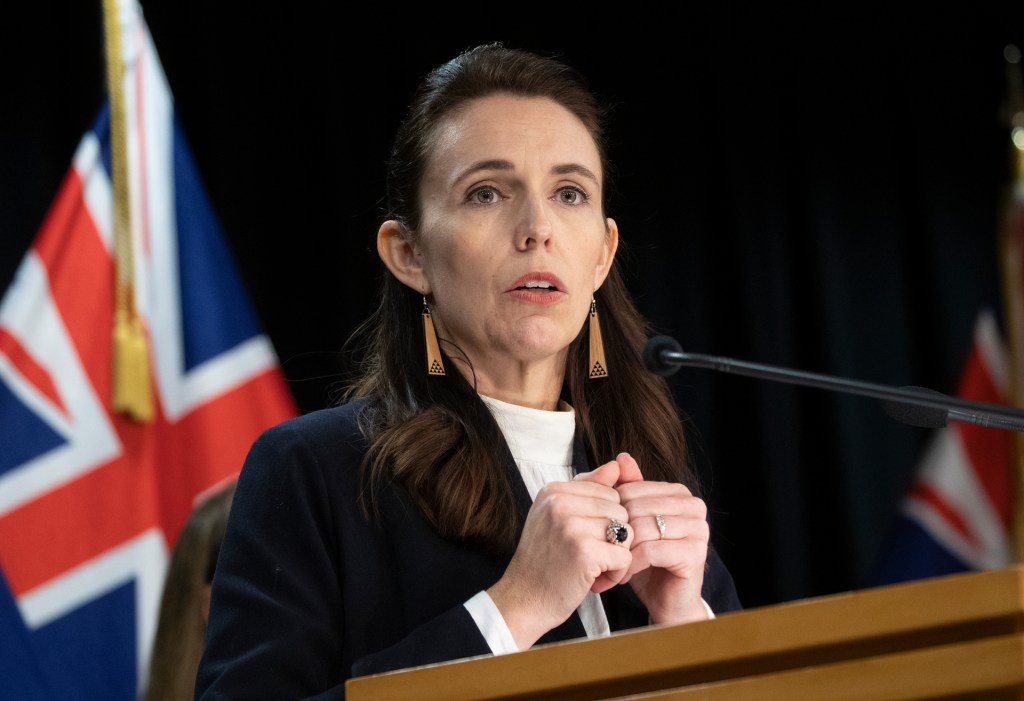
Jacinda Ardern has declared October 14 as the day that the people of New Zealand will head to the polls to decide whether the incumbent Labour Party deserves a third term in government. This election, however, comes with one caveat; she won’t be a candidate, either as a local MP or as the Prime Minister. The announcement of her resignation ahead of the October election came as a surprise to all, including her own party, who only heard the announcement in a caucus meeting just before she told the press.
Having previously rebuffed rumours of retirement, on Thursday Arden admitted that reflection over the summer break had led her to realise that now was the best time to step down. As she put it, she no longer ‘had enough in the tank’ to do the job of Prime Minister justice.
And who could blame her? From the horrific 2019 Christchurch mosque shootings that left 51 dead and communities shattered, the Whakaari eruption that killed 22, and the global COVID-19 pandemic, Ardern’s five-year term as Prime Minister has been marked by continuous unexpected crisis. Not to mention that, in amongst all this, she became the second world leader in history to give birth while in office.
“Kind but strong”
At a time where beat-your-chest right-wing populist strongmen were ascending globally, Ardern was an anomaly; a young, left-wing reformer who put kindness and compassion front and centre. Her displays of public compassion towards the communities impacted by the Christchurch shootings and Whakaari demonstrated this and earnt her global praise, contributing to her reputation on the global scale as a compassionate leader. Ardern was not just using reassuring words – compassionate leadership was also strong leadership. In the aftermath of Christchurch, she moved swiftly to ban semi-automatic weapons.
The strongest test to her leadership has been COVID-19. While the disease ran wild through the rest of the world, ‘Fortress New Zealand’ experienced low transmissions and only 48 deaths until early 2022. Determined to protect the community, Ardern held strong against domestic and international pressures to re-open New Zealand to the world. This resolve led Ardern to achieve something no other New Zealand Prime Minister has – winning a majority government – as the public rewarded her commitment to COVID elimination.
Outside of the crises, New Zealand under Ardern saw transformation in some areas and stagnation in others. Leaps were made forward in social policy; with the legalisation of abortion, assisted dying, and criminalisation of conversion therapy on children just some reforms achieved. Other key reforms included the legislation of net-zero targets, establishment of a $20 per hour minimum wage, strengthening of commitments to mandate teaching of Te Reo Māori in schools, tax increases on the wealthy. The list goes on.
Housing unaffordability and child poverty were two issues that Ardern placed front and centre in 2017 – but progress has gone backwards or stalled at best. The goal to build 100,000 houses under the real-estate development scheme ‘KiwiBuild’ has utterly failed. Social housing waitlists grow with supply unable to meet demand. Renters find themselves squeezed by high prices, while soaring house prices leave home ownership an unachievable dream for many. The response to child poverty has been mixed; with rates decreasing pre-COVID but rising afterwards, with Pasifka and Māori children still disproportionally affected compared to their Pākehā (European) counterparts.
After her government reached approvals of nearly 75% at the beginning of the pandemic, both the popularity of Labour and the personal popularity of Ardern have slumped to new lows in recent times, driven by the public’s frustration towards the cost-of-living crunch. Inflation hit highs of 7.2% in the 2022 September Quarter, driven by rising costs of rentals and commodities such as food (food inflation reached up to 11.3% in December. Even worse for New Zealand and the government’s re-election prospects, a recession is forecasted to occur sometime in 2023. In some ways too, the departure from the ‘COVID era’ of politics has reminded Kiwis of their pre-COVID gripes with Labour.
Although Ardern denied poor polling as driving her to quit, one can speculate whether this was in the back of her mind during her reflection; if already burnt out by a tumultuous term, why stick through a gruelling and likely futile campaign. Perhaps Ardern supporters who are disappointed to see her go, can take solace that her legacy ends on her own terms, rather than through electoral defeat.
Ardern will remain PM and Labour leader until no later than February 7, with a vote to elect a replacement scheduled for this Sunday. She will also remain as the member for her electorate until April to avoid triggering a by-election for her electorate of Mt Albert.
It’s unclear who’ll take over the party now. No candidates have officially announced, but several ministers, including Chris Hipkins (Education and Police) and Kiri Allan (Justice), have all alluded at runs, or refused to rule themselves out as candidates.

Whoever takes her mantle has big shoes to fill. Although ‘Jacindamania’ had waned domestically, she remains such a loved figure amongst her dedicated supporters and on the international scale. Ardern’s leadership style vaulted New Zealand into the global spotlight – a feat which will not be easy to emulate.
Ardern’s resignation also presents another thorn in the side of Labour ahead of what’s shaping up to be an already difficult election. As the party lags behind its opposition, the National Party, in the polls, Ardern’s personal popularity and rating of preferred PM over Opposition Leader Christopher Luxon, made her the party’s best hope of clinging to power. But Ardern sees things differently, believing that continuing as leader ahead of a difficult election would be doing the party a ‘disservice’ and sees a fresher face as better suited to lead. Besides, Ardern would be seeing parallels between the present and her emergence as Labour leader back in 2017, when she took power just seven weeks out from an election and dragged the party out of a polling slump and into power.
In her resignation, Jacinda Ardern leaves behind a mixed legacy. Strong and compassionate leadership made the young Prime Minister a star globally and domestically, garnering support from the public and demonstrating that compassion and strength are not mutually exclusive. A Prime Minister who took the country strides forward in some areas, but whose self-identified priorities remain unaddressed.
A reformer who rose to the challenge and guided New Zealanders through multiple national and global hardships.
 On Dit