Written by Talara McHugh
My name is Talara and I am a proud Narungga and Ngarrindjeri woman living on Kaurna land.
My mum is a strong Blak woman who raised me to call out injustice and always stand up for what’s right. It is her strength that motivated me to pursue journalism.
As a journalist, you are taught to be objective, balanced and fair, which I strive to be.
When it comes to issues impacting my community it is hard to stay silent.
The celebration of January 26 is something I have never agreed with morally.
For me and other First Nations people, January 26 has always been “Survival Day”. Regardless of what people may say, it is still a day of survival, as, despite the attempts of colonists to get rid of us, we continue to survive.
January 26 is a day of mourning for First Nations people in Australia. It marks the beginning of genocide, massacres, and dispossession.
On this day, I grieve the pain endured by my ancestors: a pain that we continue to carry.
On this day, I grieve the theft of land, language, and freedom wrongfully taken from our people.
On this day, I grieve our warriors that died defending our peoples throughout the Frontier Wars (1788-1939).
On this day, I grieve the Blak lives lost in police/state custody, and victims of vile acts of racism. I will continue to grieve each of these losses throughout my lifetime.
A lot of non-Indigenous people argue that we should “get over it” because “it was a long time ago”.
When you tell us to “get over it”, you’re telling us to forget the history that has changed the lives of Indigenous people in this country forever.
234 years on and Indigenous people still feel the impacts of intergenerational trauma to this day.
As a teenager in the 90s, my mum was treated like a second-class citizen: she wasn’t even allowed to enter the houses of her friends simply for being Blak.
My grandmother had to hide in riverbeds during the Stolen Generation era to avoid being ripped from the arms of her family.
My heart breaks whenever I think of the fear and pain they endured: this is exacerbated every time I hear the news of another death in custody, racist attack, or Blak life stolen.
In 2023, Indigenous people are still significantly disadvantaged, having a shorter life expectancy, poorer health, education, and employment outcomes, and disproportionately higher incarceration rates compared to non-Indigenous Australians.
Indigenous people have long been calling for the date of “Australia Day” to be changed dating back to the first Invasion Day protest in 1988.
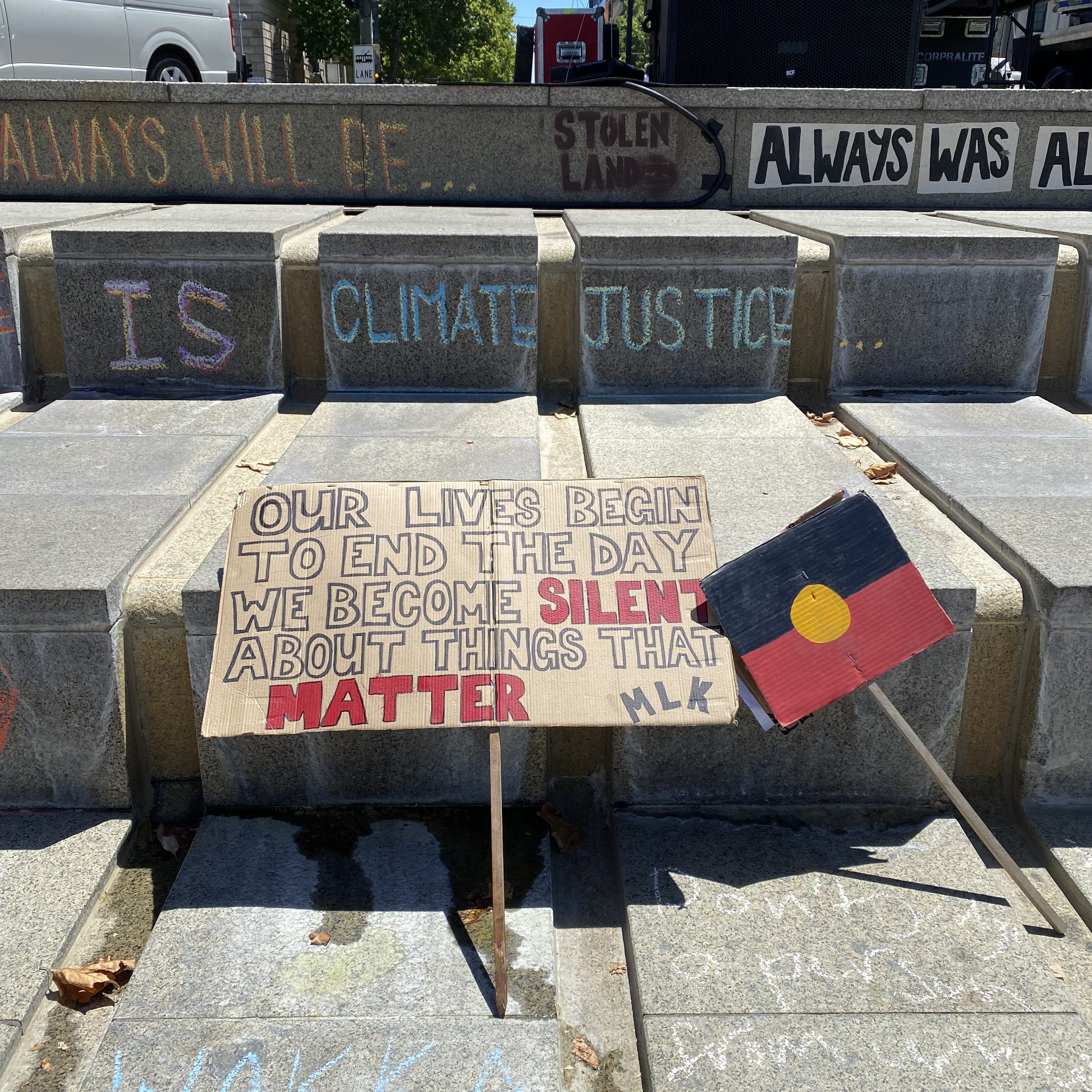
Image by Talara McHugh
It wasn’t until 1994 that each state agreed to celebrate on January 26 and prior to this they held their own celebrations marking the foundations of their respective colonies.
No other country celebrates the date of their colonisation. Why should we?
If we can have a date to celebrate the diversity of Australia that is inclusive of both Indigenous and non-Indigenous Australians, what is there to lose?
As hard as it can be to confront our shared history, it is important that it is acknowledged and that First Nations people are respected, valued, and heard.
This Survival Day, I encourage you to listen to First Nations voices and make an effort to learn, reflect and support your local First Nations community.
Next month, South Australia will have a state Indigenous Voice to Parliament introduced and a referendum to recognise Indigenous people in the constitution will be held later this year.
There is still more work needed to be done to improve outcomes for Indigenous people in Australia, and I believe changing the date will be a step in the right direction towards reconciliation.
This land always was and always will be Aboriginal land.
 On Dit