Words By Charlotte Whincup
Miss Julie (After Strindberg). Famous Last Words. Goodwood Theatre & Studios, Adelaide. Wed 19 April 2023, running until Sat 29 April.
5-Star Rating
Content Warnings: Strobing lights, drug use, mentions of suicide & depression, sexual themes, & coarse language

Based on August Strindberg’s 1888 play Miss Julie, director James Watson superbly reimagines this tale of betrayal, power, privilege, and sex for a contemporary Adelaidean audience, while adhering to the text’s naturalistic origins.
Taking place on a traverse stage, audience members are treated to an intimate single setting of the titular character’s living room.
The comfortable performance space is furnished (by designer Ruby Jenkins) with white carpet, a couch with an overhead lamp, and a coffee table, across from which sits an antique leather armchair next to a circular table with a vintage black birdcage.
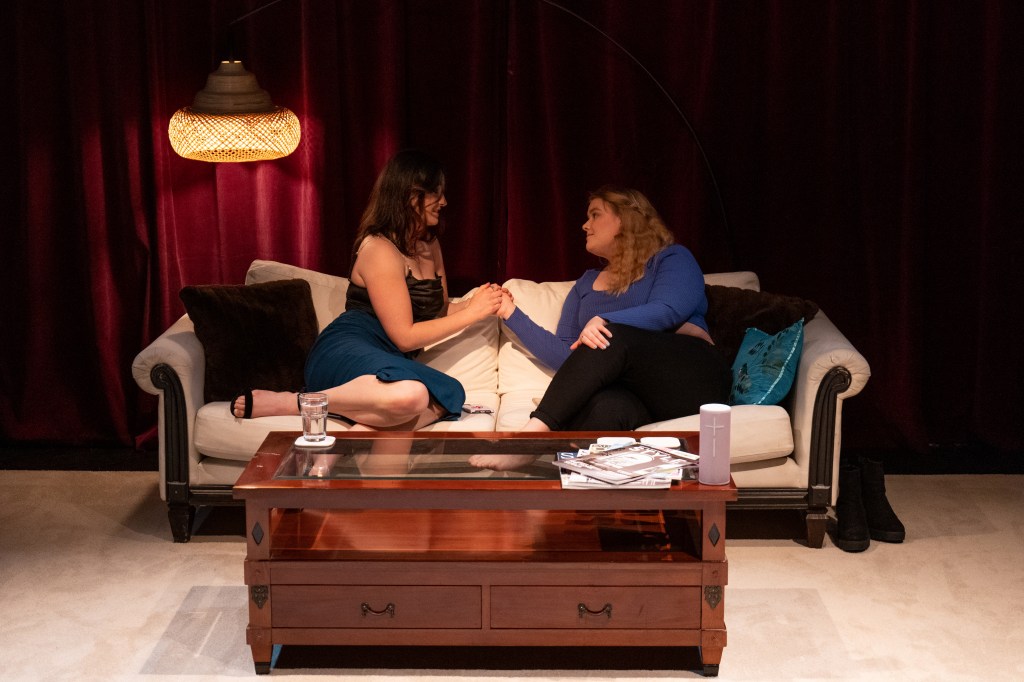
Here, we bear witness to the anxieties and hedonism of the dramatis personae.
We are introduced to rich, white girl Julie (delightfully and sympathetically played by Kate Owen) and her cleaner and “Scorpio sister” Kristine (portrayed by co-producer Emelia Williams), who are coming home from a night out at the infamous Dog and Duck on Hindley Street.
Their vernacular is unmistakably Gen Z, as Julie ponders what rating she should give their Uber driver before launching into a rant about her recently broken-off engagement to ex-fiancé Hugo, declaring that she is “over him and his greasy man-bun”.
Attempting to assert her dominance, she matter-of-factly states that she would’ve been the one to end their relationship if he hadn’t. Besides, they were incompatible because he was “a fucking Gemini”.
From this point on, Julie ironically says there will be “no bad vibes”.

Watson and the cast are to be commended for emphasising the everyday speech of today’s youth in their adaptation, which, unlike most other productions featuring young leads, never panders to a younger audience. The production seamlessly balances realism and humour in a non-cringe-inducing way for those being represented, while taking due care not to alienate other age demographics.
The rising action occurs when aspiring entrepreneur Jean (Christian Bartlett), Kristine’s partner and personal assistant to Julie’s father, enters the stage.
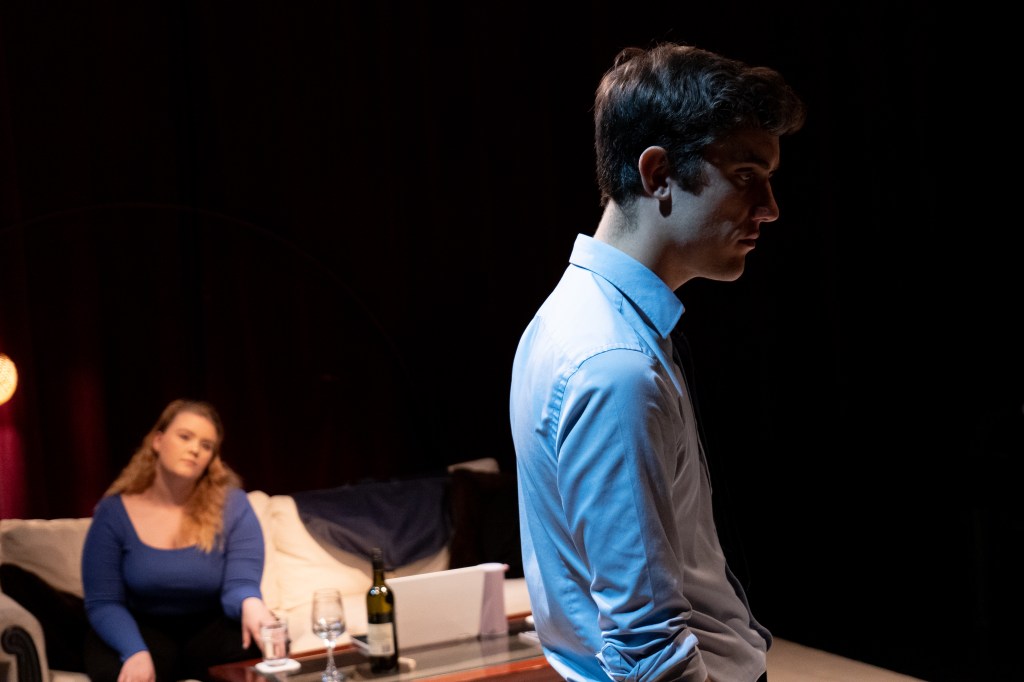
While the crux of the narrative rests on Julie’s seduction of Jean (the chemistry between Owen and Bartlett being palpable), the production’s ultimate conflict lies in the classism still prevalent in Australian society.
Each character exemplifies a particular economic category in response to dysfunctional capitalism: Julie as the product and inheritor of the 1%, Jean as ‘hustle culture’ in his entrepreneurial pursuits, and Kristine as working-class with false consciousness, being content with their socioeconomic status.
The choice of traverse staging drives the audience’s empathetic interpretation of each of the characters’ perspectives and economic situations in the aftermath of the betrayal.
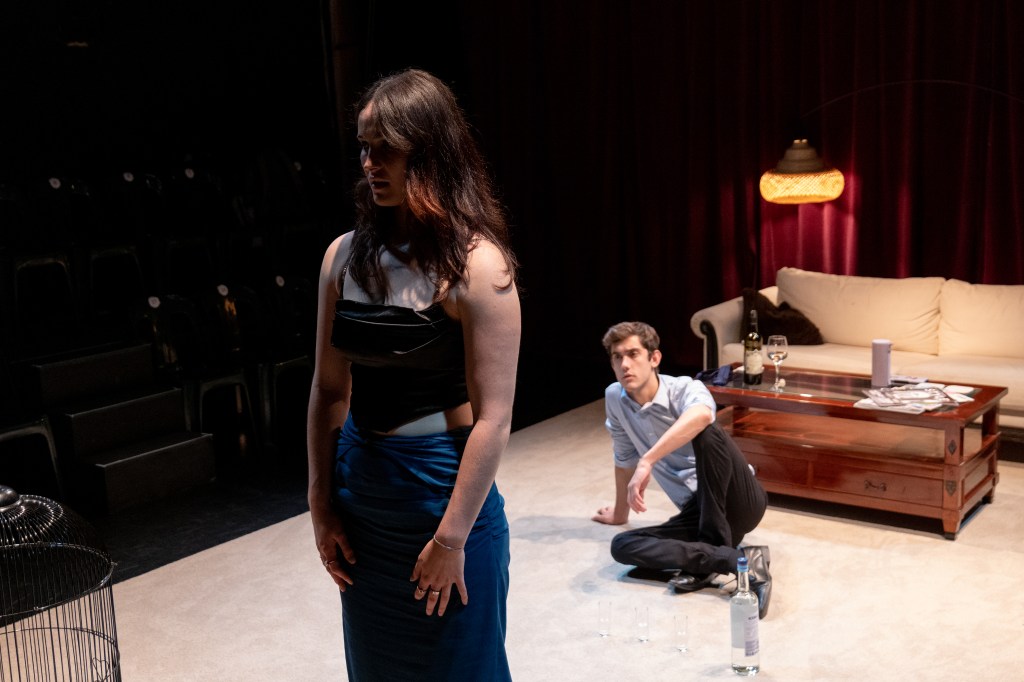
We feel for Kristine who has been cheated on by Jean with her “Scorpio sister”, but we also feel for Julie – a wayward young woman who misses her mum and ultimately wants “to be needed” and “to be seen”.
Julie is realised to be a far more complex character than Strindberg intended. Watson doesn’t demonise our protagonist in his representation, but conceptualises her as a lonely, anxious youngster trapped by her affluence.
These raw emotions permeate the narrative, uniting audience members irrespective of their generational and class divisions.
Julie is the adage “money can’t buy happiness” personified.
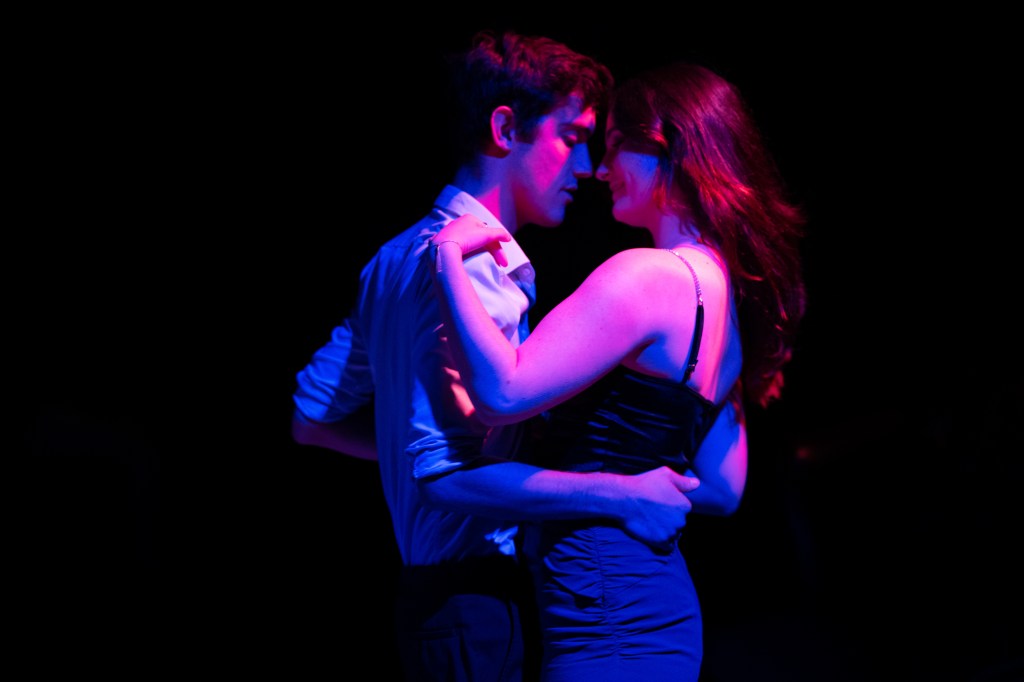
In the play’s final moments, a haunting piano score (courtesy of composer Reggie Parker) propels the subverted ending, but you’ll have to see for yourself how it unfolds.
At an approximately 75-minute duration, this production is the perfect length for those with relatively short attention spans.
Miss Julie (After Strindberg) marks an impressive start to the 2023 season for Famous Last Words at Goodwood Theatre & Studios.
If you’re looking for a low-key night out at the theatre after Mad March, be sure to snap up tickets to the show before it ends this Saturday!
 On Dit