Words by Ellie Hall
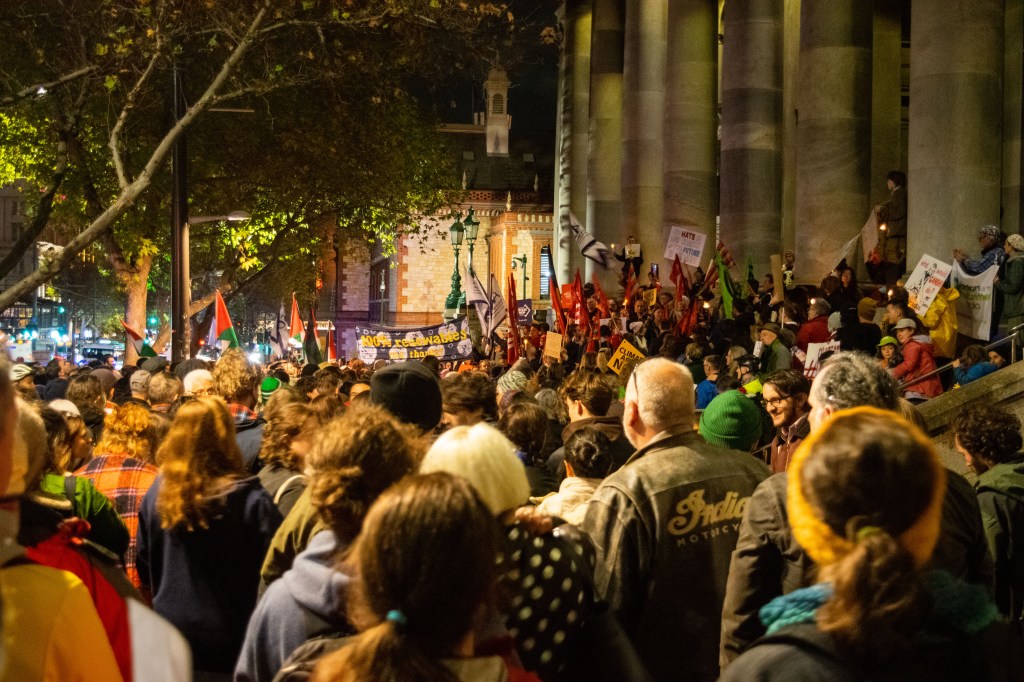
Malinauskas has pushed South Australia in line with Victoria and New South Wales in a worryingly anti-democratic trend which seeks to clamp down on increasing civil disobedience.
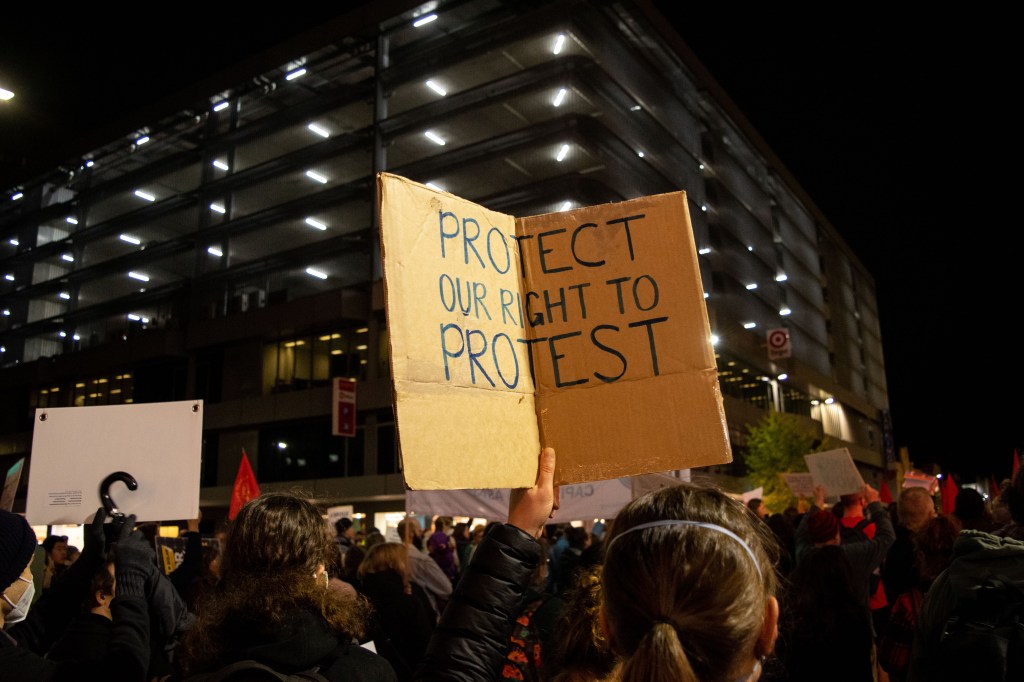
The bill, passed in the House of Assembly on 18 May and passed in the Legislative Council on 31 May, has raised the fines for disruptive protest from $750 to $50,000, and has added the potential for 3 months jail time. It intentionally blurs the lines of what constitutes a disruptive protest, and gives the police greater power to arrest protesters that they deem to be disturbing a ‘public place’, such as blocking a road or occupying an intersection.
The bill sped through the lower house less than a day after South Australia hosted the annual Australian Petroleum Production and Exploration Association (APPEA). At the protested conference, SA Minister for Energy and Mining Tom Koutsantonis proclaimed to a room of fossil fuel bosses that South Australia is ‘at your service’.
Liberal Party SA leader David Spears championed the bill, with shockingly bipartisan support from Premier Peter Malinauskas, in the interest of maintaining business as usual and protecting fossil fuel companies. It is a similar story across Australia, as state governments push an offensive against protest, including traditionally unionist Labor governments. This is amidst an ongoing climate crisis and the sharpening cost-of-living crisis.
In making public demonstration an offence, these laws not only make protest more difficult, but are a direct attack on democratic rights. They undermine union strike actions, removing workers’ ability to exercise their industrial muscle to win better wages and working conditions. In order to put any real pressure on the bosses and the State to win concessions, they must disrupt the flow of profits and halt business as usual.
Progress isn’t occurring in the way we’ve always been told. There is no slow march towards a perfect world, instead we seem to be marching backward. Rights that were hard fought for are being reversed, from Roe v Wade in the US to the ability to seek asylum in the UK. Where people fight, change is won. Through disruption of business as usual, concessions are wrested from the hands of the ruling class and the real power in society, the power of collective action, is revealed. But collective action is under attack.
The power of ordinary people to resist and fight, has consistently been undermined by the State. South Australians won the right to protest during the anti-Vietnam War movement, at a demonstration that occupied the intersection of North Terrace and King William St. All progressive change we have made in society has been driven by disruptive protest.
The Clarrie O’Shea strikes are a high point of Australian militant working class history, setting the standard for fighting against repressive state laws. The Menzies government created the Penal Powers, introducing penalties against unions taking industrial action. Using these powers, anti-democratic fines were flung at ‘disruptive’ striking unions. Militant unions fought this, notably the infamous Tramways Union with Clarrie O’Shea at the helm. When O’Shea was jailed for refusing to show the industrial courts the Union’s bank account, over 50,000 workers went on strike across Victoria in two 24-hour stoppages, with mass protests outside the courthouse where O’SHea was held. He was released soon after, when a donor paid the fines, but the legitimacy of the laws was damaged. The laws used to jail O’Shea have never been repealed, but were made unenforceable by the outcry and mass action against them.
The farce of democracy under capitalism is brought into sharp focus in moments like these, where trust in the process must be thrown out, and ordinary people must use their power to change society.
These laws won’t be changed through polite politics; both Malinauskas and other state governments protect the interests of the fossil fuel industry. Being polite and respectable only preserves their legitimacy to act against our interests.To put up a fight, we need to build the traditions of mass movements that have the power to challenge the injustices inherent to capitalism. No government would dare pass laws like this in the midst of a mass movement like the School Strikes for Climate of 2018/2019 or the Black Lives Matter movement in 2020.
To render undemocratic laws unusable and do away with the system that relies on them, we need the politics of mass struggle.The future is a contested space where the seemingly infallible system of capitalism can be brought to its knees, but this doesn’t happen easily. We need to exercise our power wherever we can, from small protests or a union drive at work, to mass movements and general strikes. At the time of writing this, the laws are still in place, but history has shown that unjust laws are defeated by breaking them.
 On Dit