Words by Sebastian Andrew
StuPol elections are approaching fast. Next week you won’t be able to take two steps without being mobbed by an eager candidate or their supporters and having a leaflet shoved in your face. In preparation for the elections, six StuPol hopefuls gathered in the Mezzanine on Thursday 24 August to engage in a nice, friendly policy debate. Weren’t able to catch it? Or maybe you did show up, but were too high to remember anything (if you’re reading this, you know who you are!)
Lucky for you, I subjected myself (multiple times) to the footage of the debate and am here to get you up to speed.
The debate was moderated by On Dit’s very own StuPol Editor, Louise Jackson. Present were representatives from six of the seven factions competing in next week’s student elections: Merlin Wang (Progress), Ellie Hall (Left Action), Harrison White (Activate), Kyan Jenkins (Grassroots), Cyrus Kelly (Transparency), and Georgia Thomas (Unite). Swipe Centre (who contested last year under the name ‘Swipe Right’) was not present at the debate. Independent candidates are also contesting these elections.
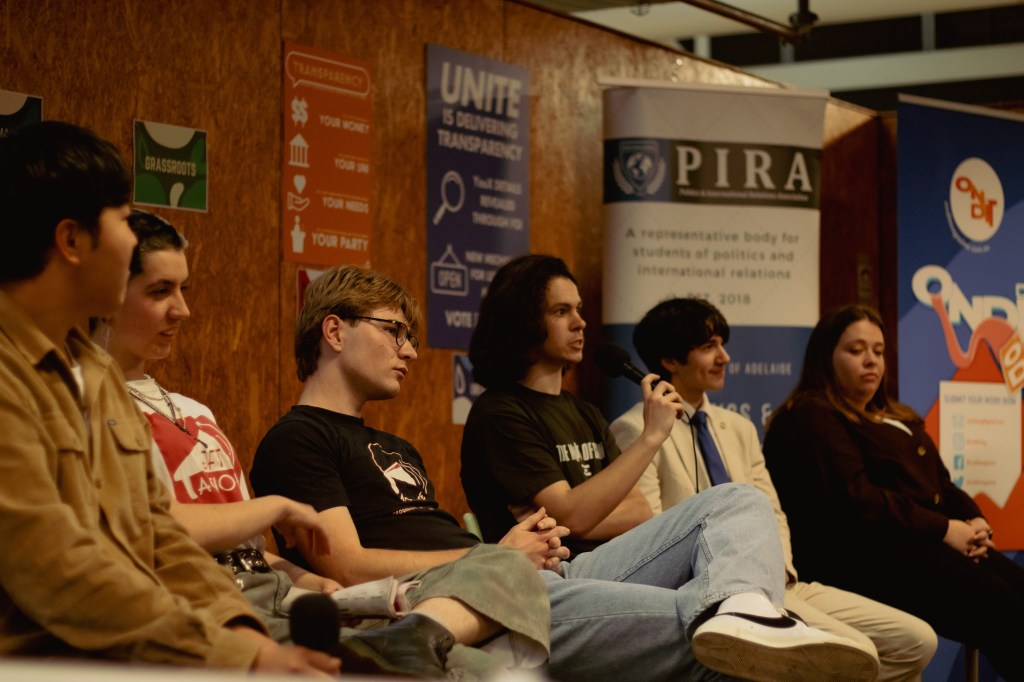
So what did they have to say on the issues?
Question 1. Political affiliations (or lack of), what informs faction policies?
Hall: Proud to be a part of a national party (Socialist Alternative) that helps them ‘fight against the injustices in the world’. They criticize other debaters’ connections to the Labor Party, particularly referencing disappointment in the recent federal Labor conference.
Wang: Stresses that Progress is not affiliated with any party, and that this lack of affiliation enables them to work with any faction to address issues facing students (which he identifies as their sole focus).
White: Although some members are part of the Labor Party, Activate itself is independent (and happy to speak out against Labor ‘disgraces’). Stresses that he is here to fight for students.
Kelly: Transparency’s members are political but the faction itself has no affiliations and no concern about individual members’ political leanings/affiliations. Argues that there need to be proper processes in place to make student representation work.
Jenkins: Grassroots is not aligned/affiliated with any party. This is a double-edged sword: it limits their access to financial resources, but also allows them to advocate for students free of external influence.
Thomas: Unite has long been affiliated with the Labor Club on campus, a majority of Unite members are members of the Labor Party – but broadly that membership is to the left of politics. She herself is a member of the Labor Party, but has no issue attacking anti-student policies.
Other points: Hall (unsurprisingly) labels Wang and Progress as ‘right-wing’. Jenkins rejects an assertion from Thomas that Grassroots is affiliated with the Greens, arguing that only a minority of members are Greens members.
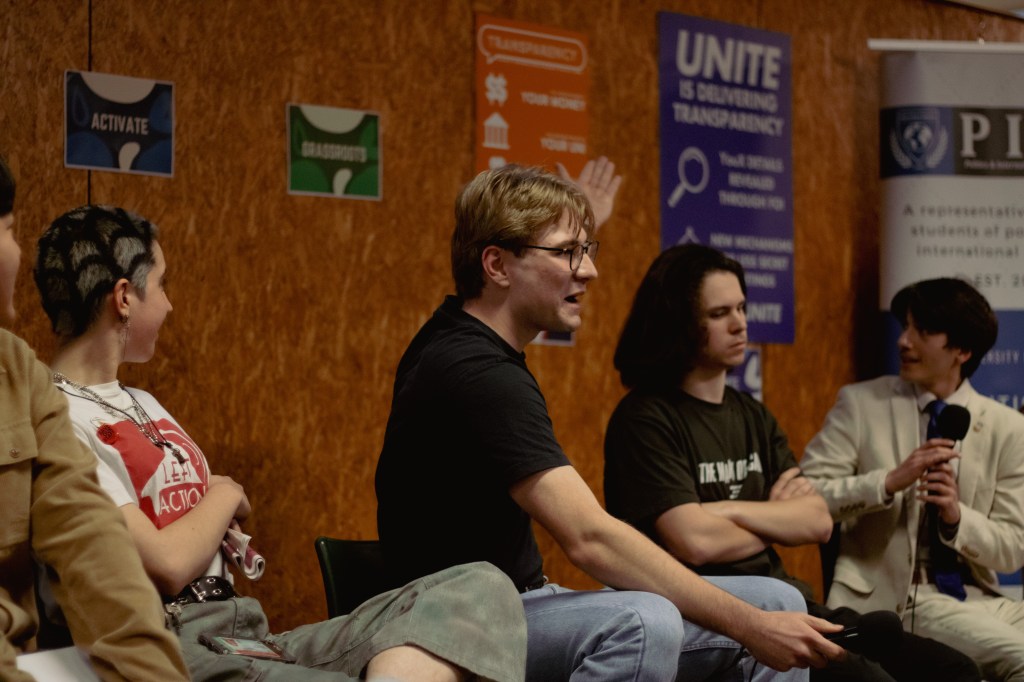
Question 2. In preparation for the merger, the YouX Board has removed the 3-year YouX memberships and will only be offering 1-year memberships. Is this a good idea? Should YouX membership be free like the USASA [the UniSA student union] model?
Thomas: Student union membership should be free. She takes issue with the requirement that candidates for student elections must hold (paid) YouX membership, arguing that this poses a barrier to students running. Points out that most student unions across the country lack membership fees.
Hall: Membership fees are a form of ‘fundraising’ for YouX, believing YouX should rely fully on SSAF (Student Services and Amenities Fee). Argues that the debate around 3-year or 1-year memberships is irrelevant to bigger picture issues. They criticize the introduction of voluntary student unionism and its impact on the function of student unions.
Jenkins: Membership should ‘absolutely’ be free. He argues that it poses a barrier, and is a real financial burden for students. States that the 3-year or 1-year debate is irrelevant compared to the issue of free membership. Further criticizes Unite for not advocating more on the issue within the YouX Board.
Wang: Uncertainty over the future status of YouX makes a 3-year membership unviable, and cautions against making any drastic changes to the current system. Making memberships free would create issues (such as for those who have already paid). However, believes that candidates should not have to buy a YouX membership to run for election.
Kelly: Students pay $542-44 a year in SSAF fees, which forms the bulk of student union funds (as opposed to membership fees, which comprise a small amount). Argues that the university could make up the funds lost from making student union membership free.
Other points: White attacks Wang on the claim that the current system is ‘democratic’. Wang reiterates that he does not support YouX membership as a requirement for candidacy. He is accused of contradicting himself by White. Wang then reiterates his opposition to the previous point, but his support for maintaining membership fees to pay for YouX services.
Jackson then reminds everyone to keep an eye out for coverage as the YouX Board continues discussions of membership costs…
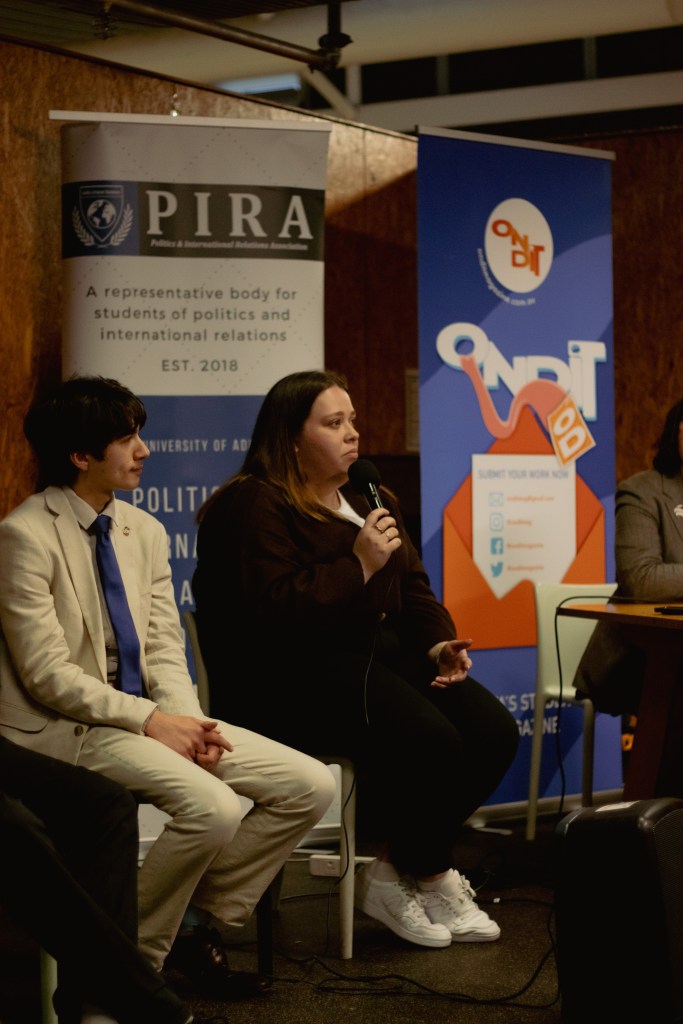
Question 3. What will you be doing to advocate for students during the merger process?
Kelly: Despite its unpopularity, the merger is happening and it’s futile to run on reversing the decision. Supports delaying the merger until at least 2027, and getting ‘securities’ for students such as legislated 50% SSAF.
Wang: Uncertain about the merger and raises concerns for student welfare. It is important to have students engaged in the process, because student opinions are the most important. He considers the merger an opportunity to fight for more SSAF, free membership for any eventual student union, and to improve student services.
Jenkins: The decision on the merger should depend on student opinion (which is near unanimous in opposition or simply not knowing enough). Criticises the federal government and the University for having made the decision 10+ years ago. He also singles out the YouX Board for discussing the merger in-camera and supports transparency regarding the discussion. Stresses that the next two years will be important.
Thomas: All information (rankings, outcomes, etc.) is geared towards corporate interests as opposed to student interests. Warns that the draft act for Adelaide Uni does not reference a student union. Pushing for legislated SSAF to protect students in the new university, a recognized student union in legislation, and for more student representation on the University Council.
Hall: Fighting for students through ‘bureaucratic bodies’ is useless – they will ignore student opinions. Agrees that the merger is in corporate interests, criticizes the university’s financial links to defence companies. Argues that the SRC and YouX should take a stand 100% against the merger. Warns of staff job losses and a worsened student experience. Argues that a student union should be maintained through collective struggle, not ‘handed’ from the top down, and stresses the need for student action to ensure the survival of the union.
White: Merger is in every sense bad for both students and staff. Warns that staff casualisation will increase, while total number of staff decreases.
Other points: There is a quick debate over SSAF targets. Hall accuses Kelly of ‘setting expectations low’ with 35%, while Kelly defends this as a better and more practical alternative to the current situation.
In the middle of Kelly’s speech, the infamous Oscar Ong arrived (most recently 2022 YouX Board President, though has had an extensive StuPol career…) , and was met with a collective booing from candidates and members of the audience. It’s important in heated StuPol debates to celebrate the things that bring people together across faction lines.
Responding to Hall’s comments, Thomas acknowledges that the University has been lacking in its approach to low-SES students (while UniSA excels at this) and supports opportunities for regional and rural students. Adds that this can be done without a merger, though. Hall argues that the best way to support regional and rural students’ access to university is to make it free.
In response to an audience question (how will the merger address this), Thomas argues that a merged institution will have more funding and better university accommodation.
Jenkins asks whether the Labor government supported and helped pass the Job Ready Graduates Bill which increased fees for Arts students. Thomas says she is not a member of the Labor government and criticises the legislation for its impacts on students.
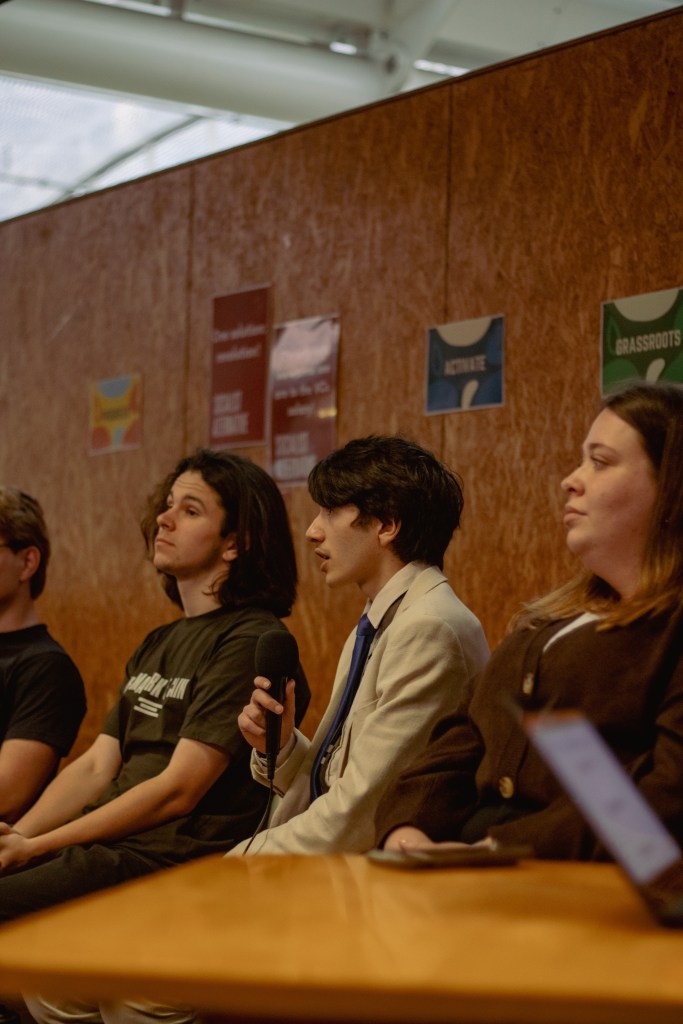
Question 4. Some say the role of student unionism is political advocacy, others say it should be strictly about providing student services. At Adelaide we have a separate YouX board and SRC fulfilling these roles. What is the future of student unionism, in your opinion?
White: Activate intends to fight for better student outcomes throughout the merger process. After being reminded of the question, says student unionism is a combination of both activism and providing services.
Hall: The SRC’s ability to operate as the ‘political wing’ of student government is impacted by its lack of funding. YouX makes political choices through its funding of the SRC, but refuses to take political stands and runs as a ‘corporate body’. Argues that students should fight, and that a genuine student radicalism needs to be rebuilt from below.
Kelly: Believes that the SRC is even being used as a political vessel and that the majority of its members do very little. He wants to see increased representation of student voices. Criticises both Unite and Progress for failing to represent student interests.
Thomas: Agrees that the SRC is severely underfunded, and deliberately denied funds to undertake political campaigns. Believes the YouX Board has taken its role as a corporate board and as ‘apolitical’ too far, to the point of not standing up for students. Criticises YouX for silence on recent issues such as the 7.1% HECS indexation and support for the Voice to Parliament. Adds that the SRC is forced to both advocate on issues and provide services.
Jenkins: Is angry at the ‘incompetent’ and ‘apolitical’ YouX Board. It is ridiculous to suggest that YouX could ever be apolitical – it makes political choices through its funding of the SRC, and is comprised of political people. Believes that student union culture is not ‘dead’, but its ability to practice activism is suppressed by lack of funds.
Wang: Agrees with White that the two aims are not contradictory. However, believes that advocacy is more a job of the SRC, and that being ‘apolitical’ for YouX leads to better decision-making and outcomes. Warns that a combined student union would impose more restrictions on advocacy.
Other points: Kelly took aim at Unite for touting its ‘accomplishments’ – rather labelling them as simply rolling back Progress’ ‘dis-accomplishments’. He then labels them as ‘failures’ after asking Oscar Ong’s opinion (Oscar Ong obviously did not suggest the term ‘failures’).
After giving harsh criticisms of the YouX Board, Thomas is questioned for Unite’s ‘coalition’ with Progress. Jenkins similarly criticises Thomas, and Unite, for running with a self-proclaimed ‘apolitical’ party.
A surprise question from On Dit’s Sienna in the audience, questioning Wang’s claim that the current system is the best outcome. She is reminded to wait for audience questions.
Kelly takes the chance to describe Transparency as ‘nonpartisan’ as opposed to ‘apolitical’, arguing that their faction is focused on ‘people’ rather than ‘politics’. Hall asserts that people are political. Kelly defends that individual members’ political leanings matters less than their willingness to fight for change.
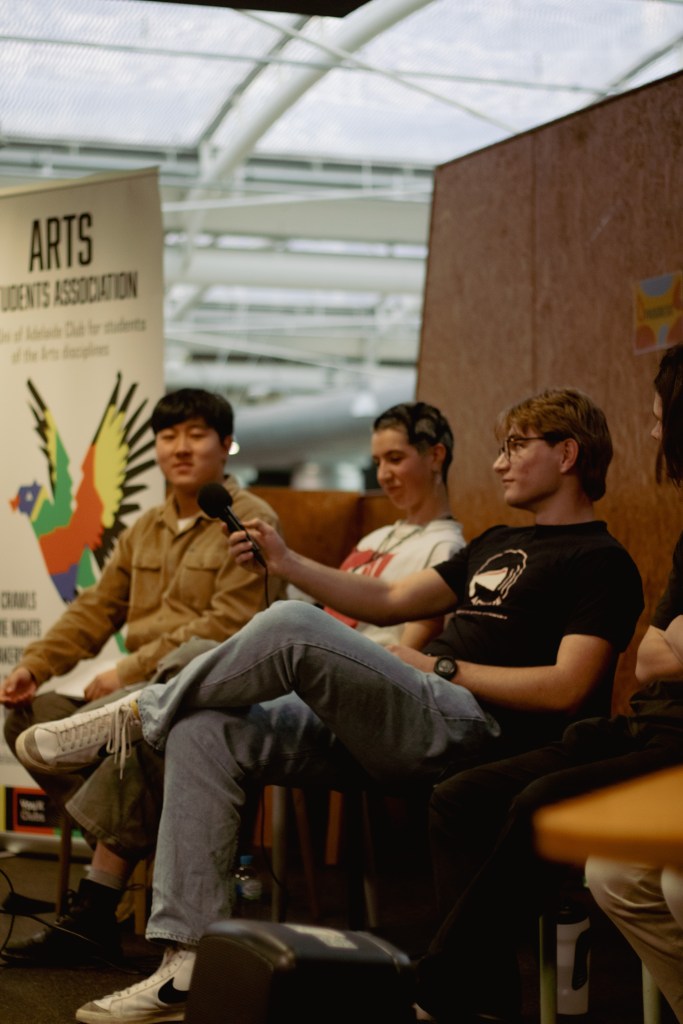
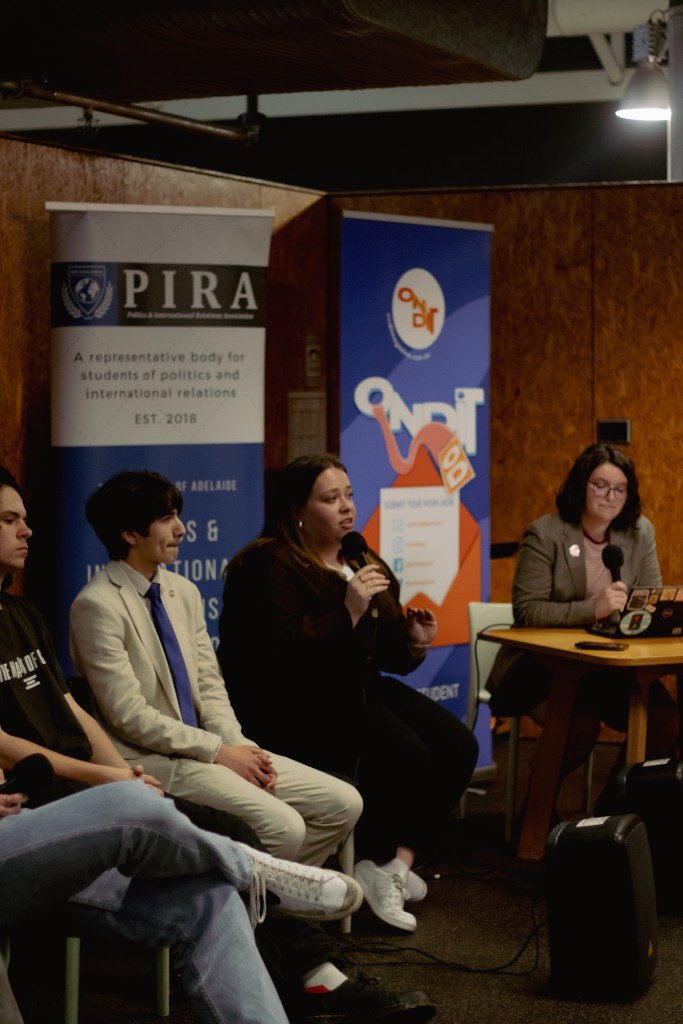
It’s then on to audience questions, which is where things start to get interesting. Well… interesting if you enjoy arguments and general heckling. It’s less interesting if you’re tasked with trying to rapidly Tweet everything that’s happening!
Why has there been no support for the Aboriginal and Torres Strait Islander position in the SRC (which has remained uncontested for several cycles), and how will factions ensure a welcoming political landscape for Indigenous scholars in leadership positions?
Thomas: The SRC has been searching for an Aboriginal and Torres Strait Islander Officer. She’s met with Wirltu Yarlu and other bodies on multiple occasions for outreach. Concedes that the University has poor Indigenous representation, argues that their voices deserve amplification in the SRC, and that it is disappointing that Unite has no candidate for the position this year. Puts part of the blame on the unwelcoming culture around student politics.
Hall: It is really important for student unions to take a stand on fighting racism. Admits that it is ‘not great’ to not have anyone in the position, and that there should be more people to fight anti-Indigenous racism on the SRC.
Jenkins: Wishes there was representation in the position. Believes it comes down to systemic issues that cause Indigenous underrepresentation, in addition to the lack of interest in entering student politics among the general student body (decreasing the available people to draw on). He wants to see this representation, as opposed to a ‘bunch of white kids’ speaking on their behalf.
Wang: It is concerning not to see an SRC representative for Indigenous students. There is not enough engagement with the Indigenous community from the University or the student union. Also believes that finding a candidate is made harder due to student politics’ reputation as being ‘brutal’, and a lower proportion of Indigenous students.
Kelly: Everyone onstage is responsible for failing to recruit a candidate to fill this position. Accepts that it is a personal failure. Promises to hold townhall sessions to recruit a candidate, and claims that if he does not have an ATSI Officer within a year, that he will resign as Transparency leader.
White: It is quite unfortunate that the position has remained unfilled for several years. The SRC should do more to support Indigenous students.
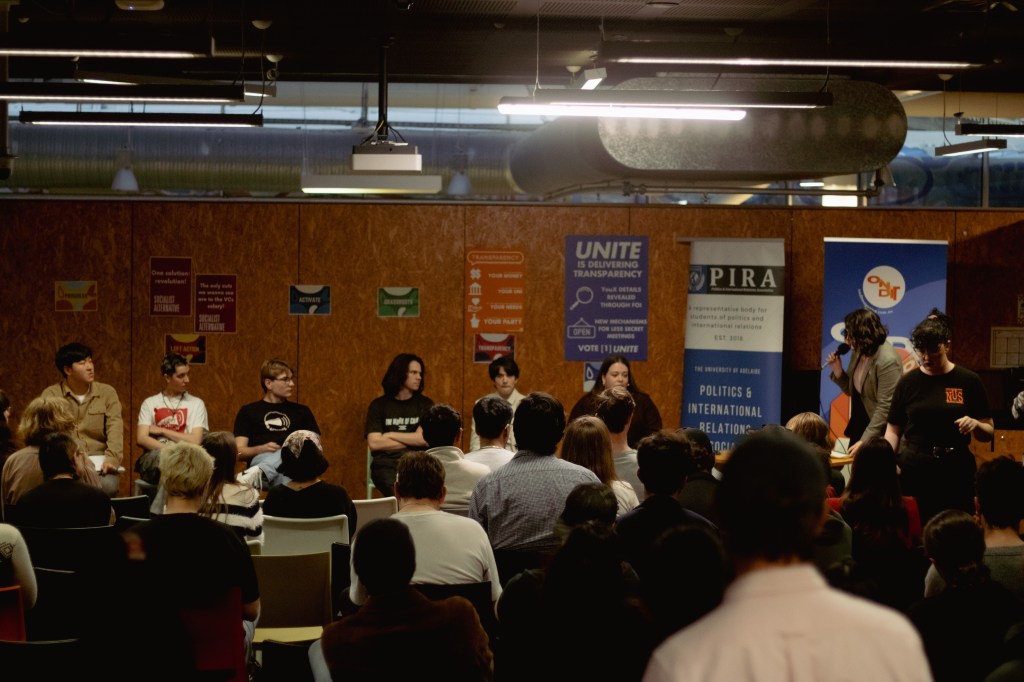
Some context for the next question: during a pre-debate discussion with the question asker, Jenkins reportedly stated ‘Yeah, Roseworthy’s not the nicest place on Earth.’
Is Jenkins’ statement a representation of others’ views towards Roseworthy and Waite campuses? How can regional campuses and students be better represented?
Kelly: Credits Unite and Progress for securing representation for Roseworthy and Waite campuses, but argues that more has to be done. Concedes that he has not visited the campuses, but will do so if he is elected. He wants to see more representation across the board.
Wang: Students on these campuses are less engaged with student organisations because they are generally unaware of student politics. Highlights the infrastructure problems facing Roseworthy due to a lack of resources, and insufficient transport between North Terrace and the other campuses.
Jenkins: Apologises for their earlier comment and appreciates ‘being kept honest’. Was drawn to support Grassroots due to their establishment of the Waite and Roseworthy officers, labels the lack of this representation when he first joined the university as an ‘injustice’.
Thomas: Joins Jenkins in applauding former Rural Officer Liam Johns (Grassroots) for advocacy on issues facing regional students. She believes that some of Roseworthy’s infrastructure is ‘crumbling’ and Roseworthy deserves autonomous representation to handle the unique issues facing them. Believes it is important to provide resources and mental health support to regional students, and that they get much less from YouX membership fees than North Terrace students do.
Hall: Agrees with Thomas that the facilities are ‘crumbling’ but argues that counselling services are inadequate at North Terrace. Addressing this requires fighting against the ‘degree factory’ and any other structures that don’t prioritise mental health and accessibility. Argues cost-of-living is hitting hard in regional areas, and attacks the federal Labor government for halving the number of free mental health appointments.
White: Would like to see more funding directed straight to the Waite and Roseworthy campuses.
Other points: There is disagreement between Hall and Jackson over the relevance of Hall’s attacks on the federal Labor government’s actions regarding mental health. Jackson suggests Hall has not actually responded to the question of Roseworthy and Waite, while Hall argues it is relevant to the issue of regional students’ wellbeing.
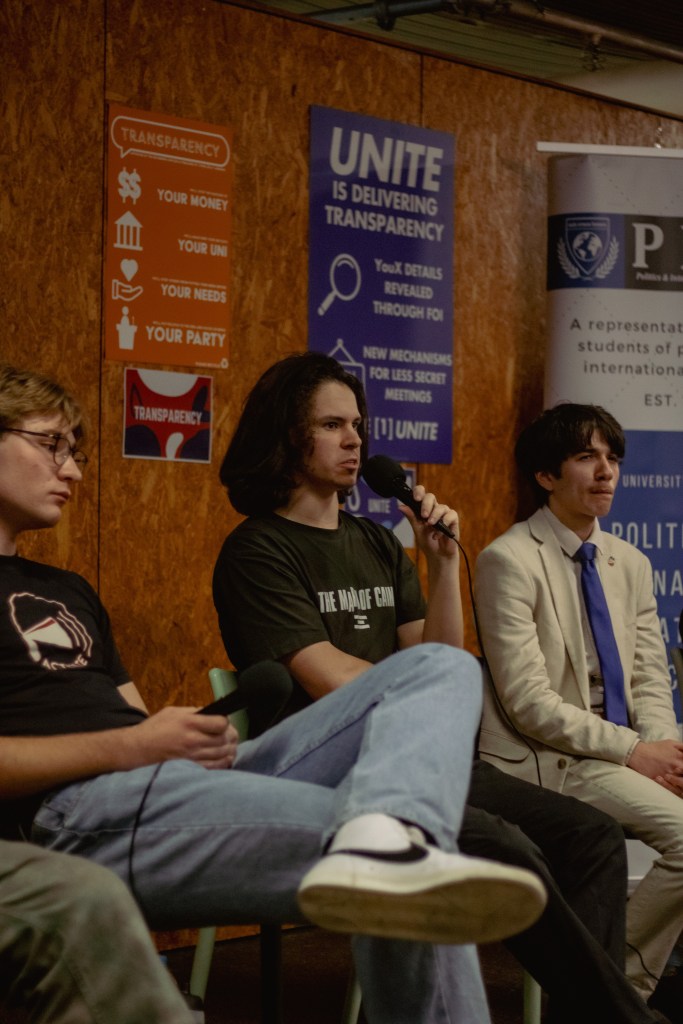
How can Progress justify an ‘apolitical’ stance in an increasingly political world?
Wang: Progress is not affiliated with any political party. This enables them to make decisions on the principles that are best for students, and decision-making is guided by a desire to improve services for students. Believes that affiliation with a party would restrict their ability to make these decisions.
The question asker argues that the label of being ‘apolitical’ creates the impression that politics doesn’t matter, and suggests ‘independent’ or ‘non-affiliated’ as alternatives.
Hall interjects to suggest that by ‘apolitical’, Progress means ‘right-wing’. They criticize Progress for voting specifically against left-wing motions such as supporting Black Lives Matter and same-sex marriage in the SRC.
Jenkins: Questions the notion that being ‘apolitical’ leads to good decision making by raising the example of the $80,000 spent on the YouX rebrand.
Wang: Defends that he was not involved in the rebrand decision.
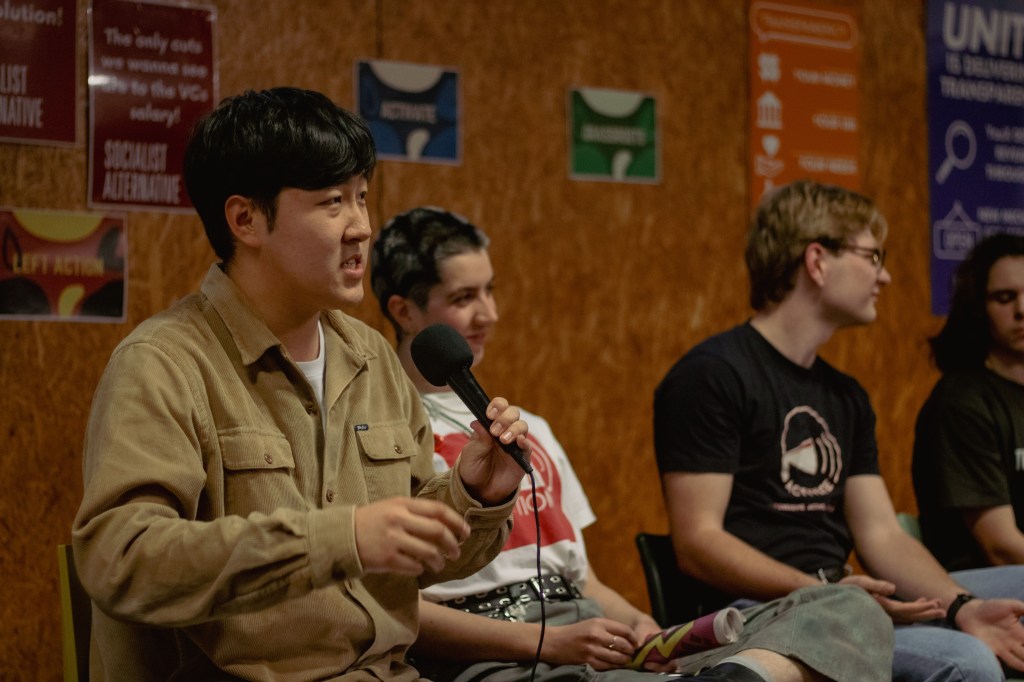
The next question begins with a response to the previous question, attacking Progress’s ‘apolitical’ stance. A polite reminder from Jackson to ask her question is then followed by jeers from the crowd to get back on topic, and an argument back and forth over previous preambles. The speaker outlines the history of student unions taking strong political stances and the importance of this role, then gets to her question (which is met with sarcastic applause)
Do you support the SRC taking a pro-Palestine stance?
Jenkins: Yes, absolutely. Grassroots believes in the sovereignty of Palestinians and takes a firmly pro-Palestine stance. Believes there is an issue in trying to crowd out discussion via passings of certain definitions.
Thomas: Unite supports Palestinian sovereignty, believes there is a way to have the discussion without impacting Israeli students. Does not support the IHRA definition of antisemitism (is asked by Hall).
Kelly: Does not see it as a relevant question compared to others. Is focused on discussing the allocation of SSAF instead and providing student services. He is personally pro-Palestine but will not speak for party members, as it is not a party policy.
Wang: Agrees with Kelly, that the student union should not take a stand on ‘controversial issues’. Believes that delivering student services is the most important area to focus on, and something that he can actually achieve. Does not believe he himself can actually make an impact on what’s happening in Palestine.
White: Activate is pro-Palestine
Hall: Firmly pro-Palestine (and lists several points to support this position), believes it’s ‘abhorrent’ to take a neutral stance on an ‘apartheid state’. Agrees with the asker of the question that student unions have played an important role in other issues, such as the fight against apartheid in South Africa, and pledges to continue this tradition.
Other points: There is a LOT of argument between Kelly and the question asker. There was an audible ‘uh oh’ from the crowd when it was Wang’s turn to answer. Wang is double-teamed by Hall and an audience member over his stance, while they argue the University does not take the same ‘neutral’ stance, and for Progress voting against pro-Palestine motions in the SRC.
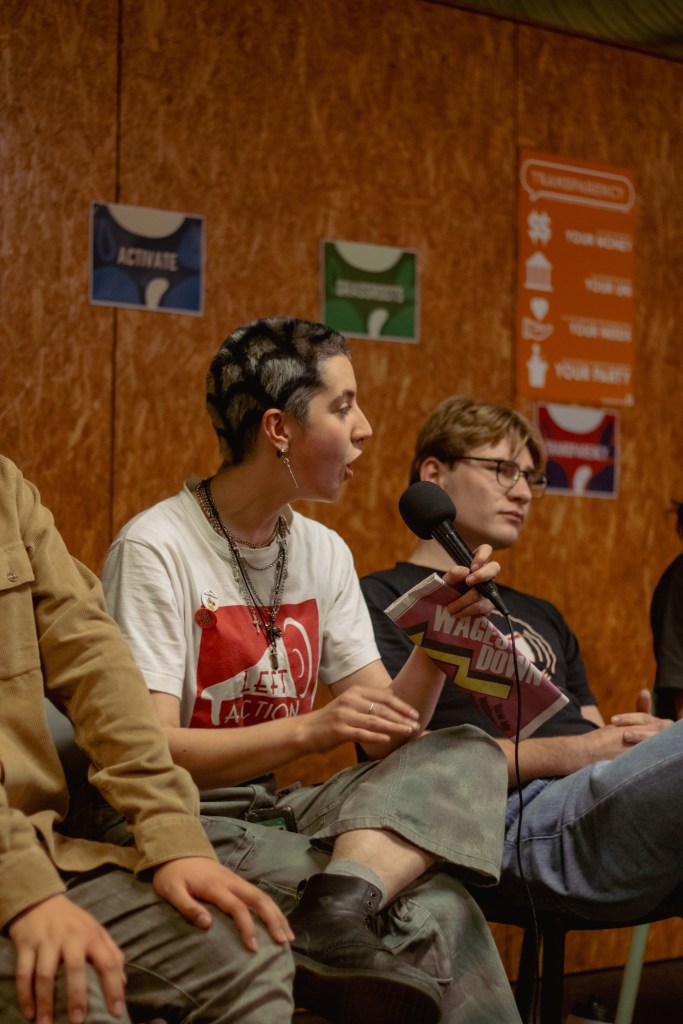
What will you do to reverse the Adelaide University Health Practice decision to scrap bulk billing for students?
Hall: Has already started a fight on this issue. Will fight not only to return bulk billing but also to reverse the privatization of the clinic. Argues that people cannot afford to go to the doctor, even on a university campus.
Wang: Progress does not support the scrapping of bulk billing. Believes that students deserve free and reliable health services, especially in the face of the cost-of-living crisis. Concedes that reversing it will ‘take time’.
White: Believes that students face the brunt of the cost-of-living crisis. Will always stand for universal healthcare and the right for students to have the care they need.
Kelly: A diplomatic conversation, rather than ‘being loud’ is needed. Concedes that we’re all broke university students.
Thomas: Students deserve accessible and affordable healthcare on campus. Believes it’s easier to bulk bill with the tripling of the bulk billing incentives. Sees the merger as presenting an opportunity to return the Health Practice to University hands and that the alleged ‘record profits’ of the new university would make this more than feasible. Labels the scrapping of bulk billing as ‘disappointing’ and criticizes certain unnamed student representatives for a lack of understanding of the implications.
Jenkins: Will push for a complete reversal. Stresses against the notion of this issue as being ‘unimportant’ and states that the services provided should be completely free.
Other points: When it is raised by an audience member that Progress supported the privatisation, Wang reiterates that he did not support it.
Upon referencing the cost-of-living crisis, White is attacked over Activate’s affiliations with the Labor Party (as they are currently in power) and thus begins a spat between White, Hall, and members of the audience. Hall accuses White of having parliamentary ambitions. White labels Socialist Alternative a ‘multi-level marketing organization’. Things then get personal and eventually the debate gets back on track.
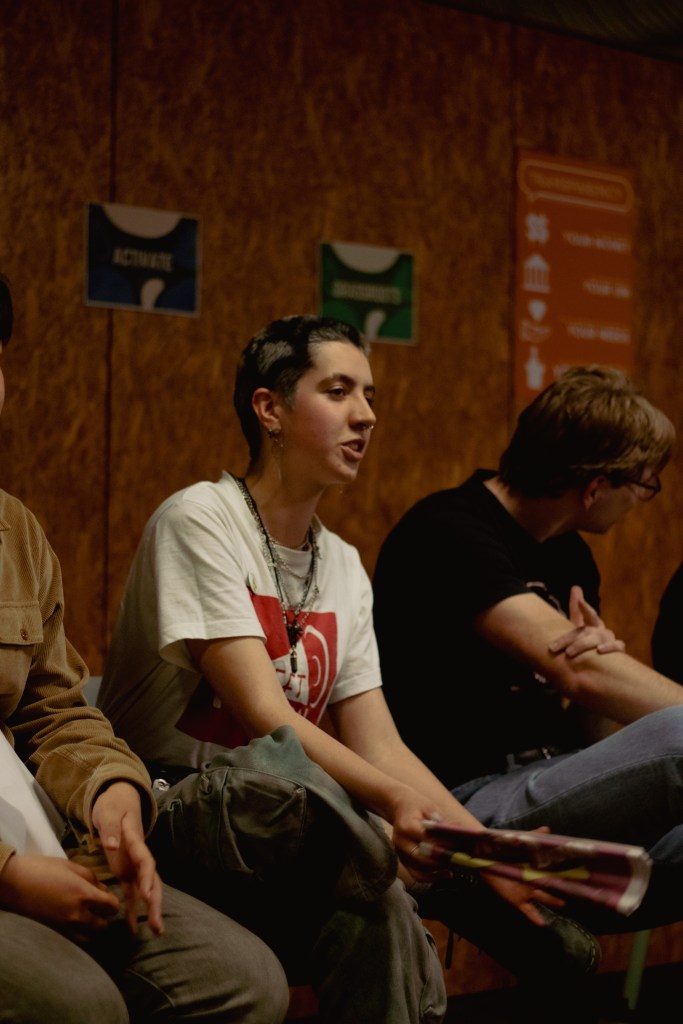
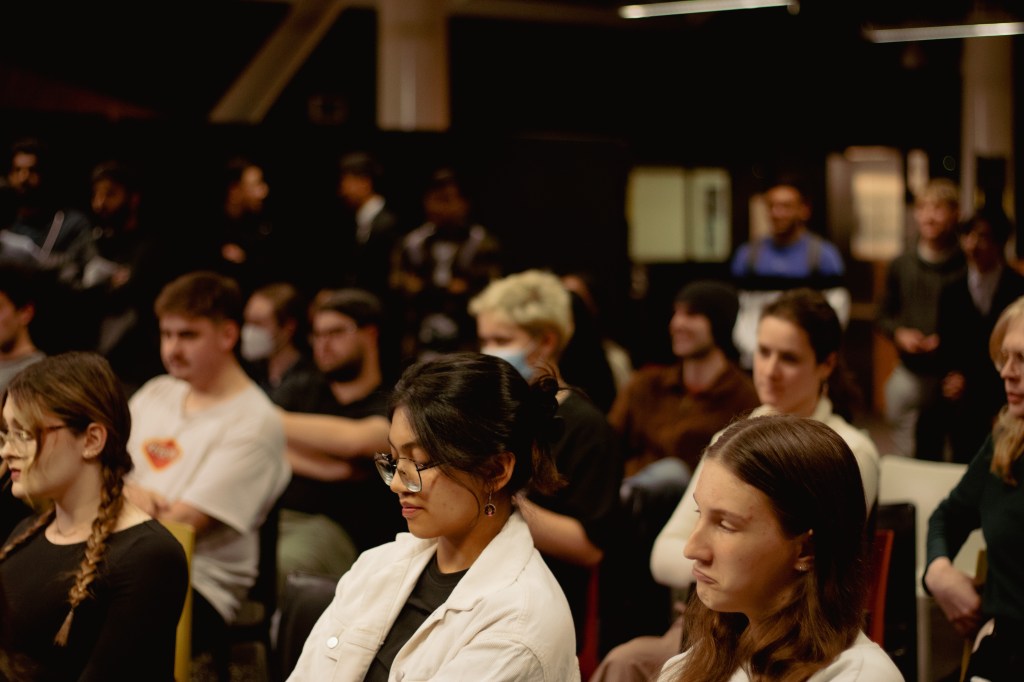
As far as StuPol debates go, that one was apparently rather tame? Having not attended since 2020 (I know, scandalous!), I was quite surprised to hear that. As the debate dragged on, and the attacks became more personal and relenting, perhaps we needed another Oscar Ong entrance to unify us?
If you’re interested in checking out the debate in full, you can find the live recording on our Facebook page.
Student elections open next week, Monday the 28th of August at 9am to Friday the 1st of September at 4pm. Student elections matter and, as demonstrated by this debate, different factions hold different opinions on the issues that will affect you. Whether you’re a diehard and plugged in supporter of a faction, find StuPol a childish display and loathe everyone involved, or are a new student who has no idea what’s going on, please exercise your right to vote!
 On Dit
One reply on “StuPol 2023 debate: The Candidates Clash”
[…] The requirement for a paid YouX membership to stand as a candidate in student elections was rejected by all faction representatives at the 2023 StuPol Debate. […]
LikeLike