Words by Sebastian Andrew
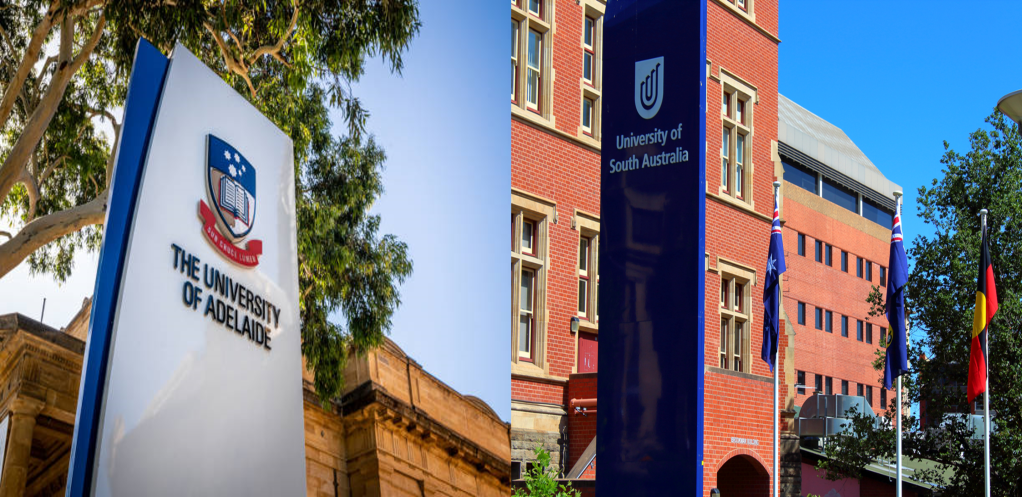
They say the third time’s the charm. After discussions fell apart in both 2012 and 2018, merger talks are back in the news. The long-proposed merger between the University of Adelaide and University of South Australia is seemingly closer than ever to becoming reality.
To be clear – no deal has been agreed upon.
The email sent to all University of Adelaide students by Chancellor, The Hon. Catherine Branson AC KC stressed that ‘no decision has been made to merge our university with any other institution’ and the email sent to University of South Australia students was even blunter in urging caution. Understandable, given how talks have seemed promising but broken down in the past.
What has happened is the Vice-Chancellors of both universities have signed a statement pledging to pursue a merger. The statement also outlines design aspects of the new institution (such as naming and leadership procedures during the transition period). The Vice-Chancellors will now engage with students, staff, and the community as part of feasibility study to assess the impacts of a merger. They will report back to their respective university councils by the end of June 2023.
Should the Councils of both universities agree that a merger is desirable, it will proceed. The new institution – ‘Adelaide University’ – would commence operation in January 2026.
Plans to facilitate a change more forcefully through a ‘merger commission’ have been delayed. Establishing the commission was a promise Labor took to the last state election. This body would have facilitated talks, studied the feasibility, and provided guidelines for the new institution’s design. Although Labor reserves the right to establish this body should talks stall, both Vice-Chancellors have indicated this is unlikely to be the case. University of Adelaide Vice-Chancellor Peter Høj labelled the commission ‘unnecessary’.
What’s changed?
Although not all details are public, it is understood that disagreements around the position of Vice Chancellor in a merged institution played heavily into the breakdown of previous talks. A perceived power imbalance entering into the merger was also one of many concerns. UniSA was concerned in 2018 that the merger would see University of Adelaide staff retain majority of positions in the new institution. To some extent, this seems to have been addressed in the statement. Members of a Transition Council would be sourced equally from both universities. A ‘co-leadership’ model would see both universities appoint their own a Vice-Chancellor until an open process facilitates the selection of one by the new institution.
UniSA Chancellor David Lloyd also attributes the COVID-19 pandemic to making clear the ‘fragility’ of higher education. While both institutions suffered hits to revenue due to impacts on the movement of international students, the hope is that a merged institution would be strong enough to weather future events, being in a better position due to increased revenue and student intake.
What are the arguments?
On their own, neither university has the size or resources to attract sufficient international interest. Proponents see the merger as an opportunity to place South Australia at the forefront of Australian tertiary education on the global stage. The newly created Adelaide University would be Australia’s largest educator of students. A higher international standing would bring with it increased investment, allowing for the development of research capabilities and output, and greater inflow of international students. South Australia would also be a more desirable option for interstate students. This wouldn’t just be to the benefit of the university, but also to the local economy as more overseas and interstate students live and spend in South Australia.
The Adelaide University would also be capable of attaining and sustaining a Top 100 university ranking. Both the University of Adelaide and University of South Australia failed to make the QS World University Rankings Top 100 list (University of Adelaide just barely missed, UniSA was further down), while a survey by the British publication The Times placed the University of Adelaide at 88, while UniSA was ranked between 300-350. Why does this matter? Higher rankings lead to higher chances of investment for research and education, and a more appealing and competitive place to study.
Opponents argue that jobs and choice are threatened by a merger. The statement of cooperation promised the merger would result in ‘no net job losses’ – phrasing that opponents of the merger, such as the student group No Adelaide University Cuts, have pounced on.
“The choice of phrase ‘net zero’ implies not ‘zero’. We know from the Adelaide Uni example that mergers are a code name for cuts,” said the group’s spokesperson Ana Obradovic when contacted for comment. She added, “the corporate priorities of Malinauskas and uni management contradicts student and staff demands of quality, accessible education for all.”
Even if all job losses are offset with new hirings, the fact is that an undetermined number of staff members are going to lose their jobs. But also making the claim of ‘net zero’ job losses a bit unclear are current stats. Adelaide University is expected to have 3,100 staff. Currently, sources suggest that the University of Adelaide has 3,500+ staff, and UniSA has 2,900+ staff.
Something doesn’t add up…
Student Representative on ABLE Faculty Board Ivan Yankovich expressed scepticism towards this promise, warning of the inability to forecast job losses this far in advance, and urged vigilance from student representatives and the National Tertiary Education Union (NTEU) ‘when and if’ job losses occurred.
Andrew Norton, a higher education researcher of Australian National University, warns that the merger results in a monopolisation of education, bringing with it reduced competition and choices for students. This sentiment was mirrored by Yankovich.
Limiting student choice about where to study is worrying, especially when many of us don’t have the means to afford studying interstate. With Flinders not being a practical option for many students north of the CBD, the proposed ‘Adelaide University’ may produce an unhealthy monopoly – and the quality of service will suffer as a result.
Also under threat, according to Norton, is the university experience. A merger geared heavily towards attracting international investment to develop the institution’s capabilities is a shift towards preferencing ‘research culture’ – to the possible detriment of students.
Whether you support or oppose the merger, now is the time for students – current and future – to let their voices be heard. Your quality of education is worth fighting for.
The statement of cooperation can be found here for further reading.
Professor Peter Høj AC (University of Adelaide Vice-Chancellor and President) and Professor David Lloyd (UniSA Vice-Chancellor and President) were approached but declined to further comment.
 On Dit
One reply on “Merger 2026: What You Need to Know”
[…] Keep an eye out for more On Dit coverage of the merger. In the meantime, On Dit reported in December last year on the announcement of merger talks proceeding. If you’re confused about what all this means, or want more insight into the arguments posed by proponents and opponents, check out our article here. […]
LikeLike